Unknown's avatar

About The Tuesday Prude

I always told my husband I fell in love with him before I know his last name. Good thing, too. I'm beginning to enjoy my unusual and sturdy married name. Klumpers are almost as rare as prudes. However, in an effort to make it a more common household name I bore 3 sons, all Klumpers, and a recent Klumpers grandson has been added to the lists. In an effort to make prudishness a more common household virtue, I have created this blog.

Things Never to Say to Someone Who Says Things They Shouldn’t Say

SONY DSC

In the parking lot at the funeral home where a celebration of life will be held for your coworker’s recently-deceased 103-year- old grandfather, you check that you have tissues, breath mints, sympathy card.
You riffle through your stack of laminated printouts you never leave home without—
the lists gleaned from Facebook and Twitter that guarantee you will never, ever, say the wrong thing at the wrong time to the wrong person.
You know the great-great granddaughter of the dearly departed is homeschooling her 11 children.
She is pregnant with #12 and adopting 7 children from a yet-to-be-named foreign nation.
Quickly, you scan
’8 Things Never to Tell a Homeschool Mother,’
‘Stuff You Don’t Say to a Pregnant Woman’
and
‘Which Questions do Large Families Hate the Most?’
trying to memorize the contents.
With sinking heart you also locate ’The 22 Most Insensitive Statements to Make to an Adoptive Family.’

You have recently lost 125 pounds and hope everyone at the celebration of life has read
‘Make Sure You never Say This to Someone who Recently Lost Enough Weight to Constitute Another Human Being’ while secretly hoping they ignore #5 on the list, which instructs them to not tell you how great you look.

You are at the bottom of the stack and still have not found the shiny sheet detailing
‘7 Things Never to Say at the Funeral of a Centenarian.’
To your horror you realize you grabbed
’30 Things You Should Never Tell a Person Whose Tailless Rat Just Bit the Dust.’
Your eyeballs roll up and to the left as you try to access the information you didn’t think you needed to store in your brain because every time one of those lists came through on social media you printed it out, for Pete’s sake, because the list labeled ‘Eight Things Never to Do in a Social Setting’ started with ‘Never check your smart phone to access the list.’
So you had them all made into these palm-sized laminated cards and now, good grief, good grief, you have the wrong one.

You debate turning around and going back home.
You actually have the key in the ignition when a rap at the window freezes you mid-click.
Your coworker, who should be standing in a line with the rest of her mourning family, all 94 of them, is outside your car.
Tears stream down her cheeks.
In her eyes you see the need for comfort and the absolute, childlike trust that you won’t say anything you should never say at the funeral of a centenarian. And you are frozen, key turned just far enough forward for the radio to perk out ‘Let it Go’ and you don’t know what not to say.

These are fearsome times. Shared knowledge has met the generation raised by parents who had their consciousness raised by the generation who had flowers in their hair and knew their way to San Jose.
This ‘Let go and let your feelings lead, and make sure to incorporate the feelings and emotional responses from everyone around you,’ when exposed to social media, has developed a people group with the sensitivity of an African Violet and as many possible points of insult-receptors as a hedgehog.

In the days of WWII, posters plastered throughout this great nation encouraged silence.
“Loose lips sink ships.”
One never knew if a Nazi, Fascist, or Imperialist might be listening for some loose-lipped American to decant some secret fact they weren’t even aware they possessed, and sink a ship.

In 2014, our national fear is letting fly some disparagement we might not have realized was insulting. (Let’s save the people-group raised by the people-group whose mantra was ‘I’m OK, You’re an Idiot’ for another discussion.)

Some things we instinctively know never to say. Others we learn via a jab from a humiliated mother’s elbow. Like ‘when seeing a gentleman with extra girth in his midsection, do not ask when his baby is coming.’
Some things we don’t know we shouldn’t say, merely because the lifestyle confronting us is outside our tent of experience. When one has met few homeschoolers, one tends to say, “But what about socialization?”, all unaware that they hear this question thousands upon thousands of times. The voluble response, however, will make one dash home and begin a list titled “THINGS NEVER TO SAY TO A HOMESCHOOLER ‘ with #1:
‘Never ask about socialization.’

But who knew that #32 on the list of 40 things you should never say to a DJ is
‘Can you play something faster?’
Or that you shouldn’t tell a working mom you admire her organizational skill?
Some lists contain common sense sorts of things.
Don’t tell a pro-wrestler he doesn’t look so tough.
Don’t ask a Canadian where they park their dogsleds.
Don’t tell a book lover you were surprised the library doesn’t just carry DVD’s.
Or the TSA guy at the airport that you’ve got a bomb built into your fake elbow.
In our plethora of ‘Things Not to Say’ lists, it would be delightful not to have to list common sense things.
But I believe the previous line comes under the heading ‘Things Not to Say to a Things Not to Say List-Maker.’
Your generally bright average kind person doesn’t tell someone who can’t afford to travel to Dairy Queen that they haven’t lived till they see Constantinople in mid-summer.
Any degree of sensitivity will keep us from telling a lonely single person how great (or awful) married life is and a yearning childless couple how great (or awful) children are.

Words can hurt. But sometimes they are just the stuff erupting from a well-meaning pinhead.
The words leave the speakers’ mouths blunted and benign but by the time they reach our ears, we have honed each one to rapier-sharpness while turning our most vulnerable side right into the line of friendly fire so we sustain the most damage.

Common sense and common thoughtfulness are ingredients we should add to our well-meant words before presenting them to the listener.
Grace is the after-market addition provided by the listener, an ingredient so powerful it can take words —flat or sharp—remove the sting, plump out the awkwardness, and reveal the heart of the presenter.

Sometimes ‘Grace’ is all you need on your list.
Aging Like a Conifer

‘Let me grow lovely, growing old”

is a poem by Karle Wilson Baker, which I’m not sure I can reprint because I’m not sure it’s public domain. (Prudes thrive on assessing and evaluating each potential action they might take, then searching for laws that could prohibit such action.)

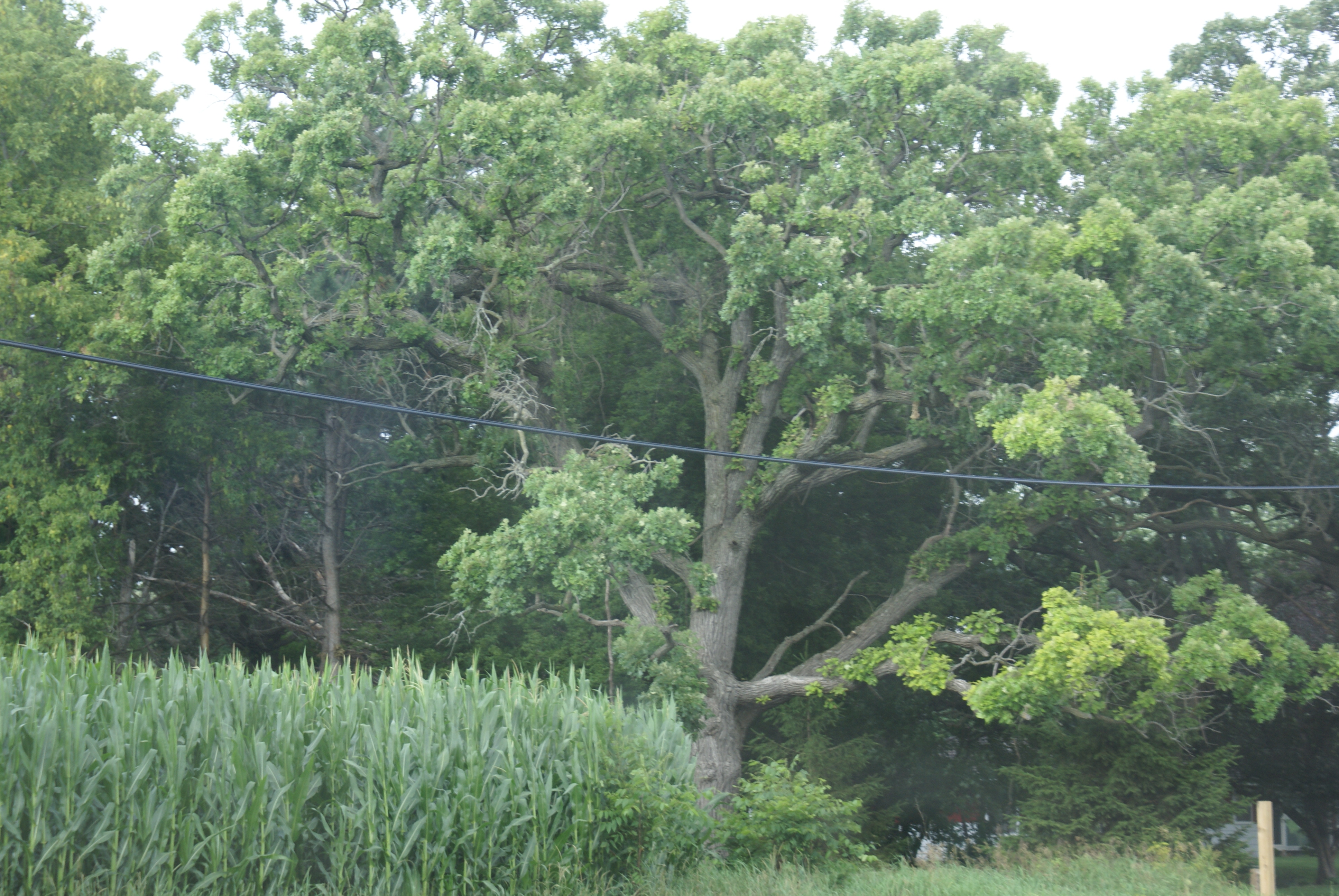
The poem goes on to extol other beautiful, fine old things, like lace. Trees make the list.

Oak trees grow lovely, sure.SONY DSCMaples? You bet.

The venerable weeping willow droops gracefully as she sheds her final tears. SONY DSC

Elms, even those untidy, drop-their-messes-everywhere mountain ashes—

hardwoods wear their age well.


The leaves these old deciduous trees dropped the previous autumn might not all be replaced in the spring. Come late summer, their scant leaves fade into fall hues even as their younger compatriots still flaunt green foliage.SONY DSC

But sparser leaf covering serves only to accentuate the splendid outlines of these trees.

There is dignity in the gnarled, scarred trunks.

Branches, some of them more fragile now, still extend with grace and beauty. More of the basic structure is being revealed, and it is beautiful.

The deciduous tree is stately.

Its oldness has a fine quality.

Even the most elderly of these, naked and alone, can provide a perch for the majestic bald eagle.

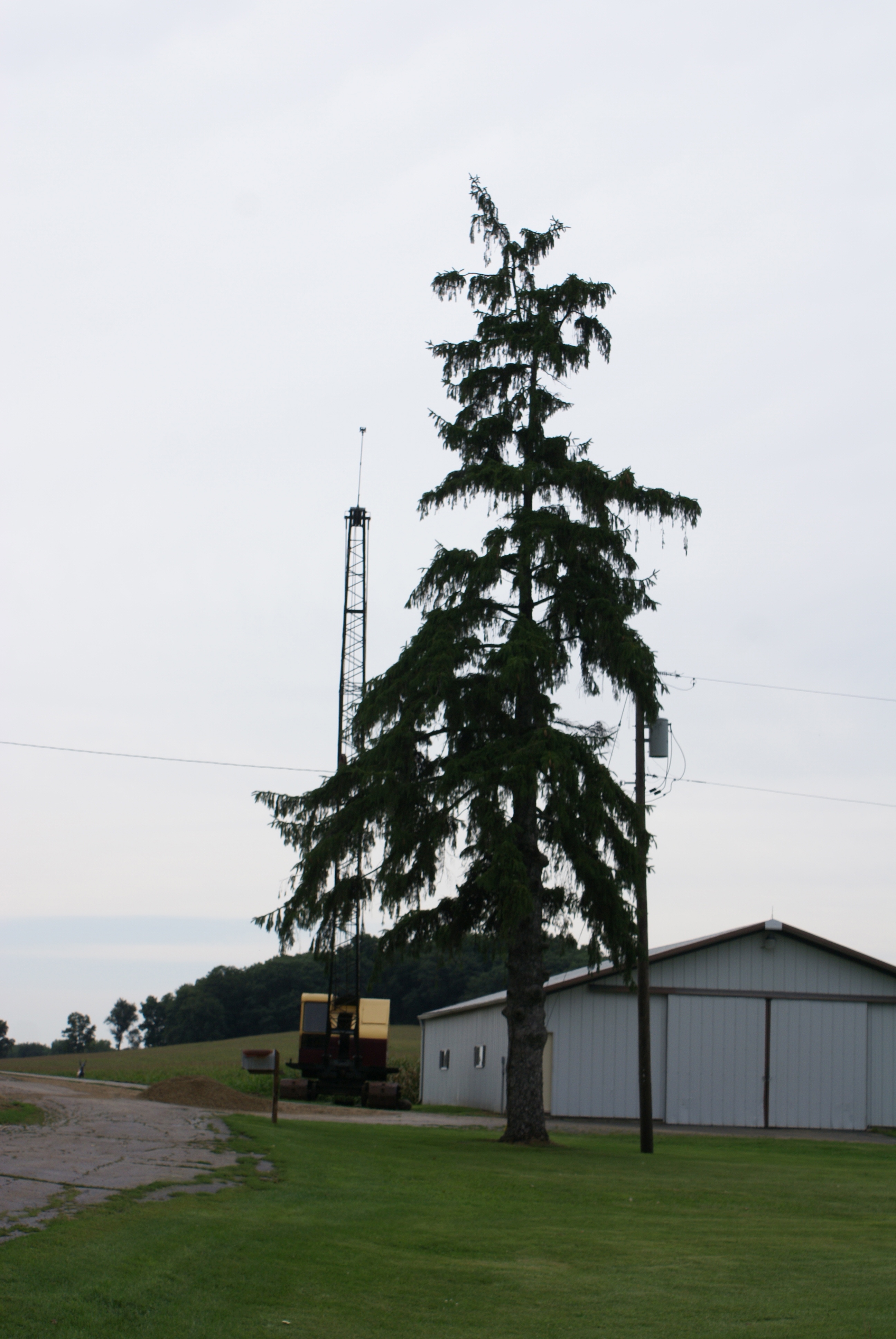
SONY DSCWhat about the aging conifer?

With the exception of the giant redwood, maybe the grand cedars of Lebanon, very few elderly needle-producing, cone-bearing softwoods inspire poets.

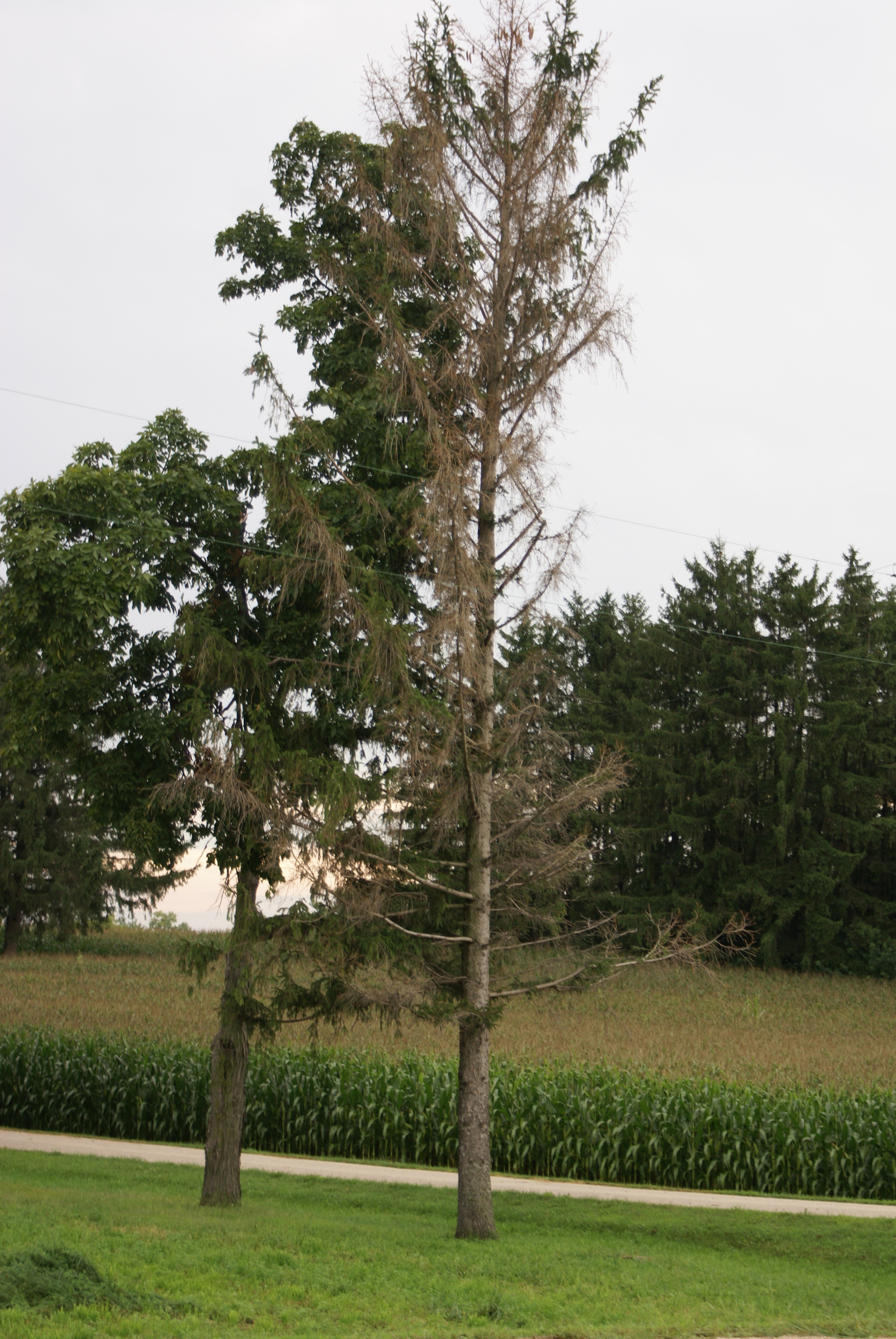
SONY DSCA spruce, on exiting middle age, gets all prickly and irritable and begins to drop things.

The ancient fir suddenly realizes he is more bark than bite.

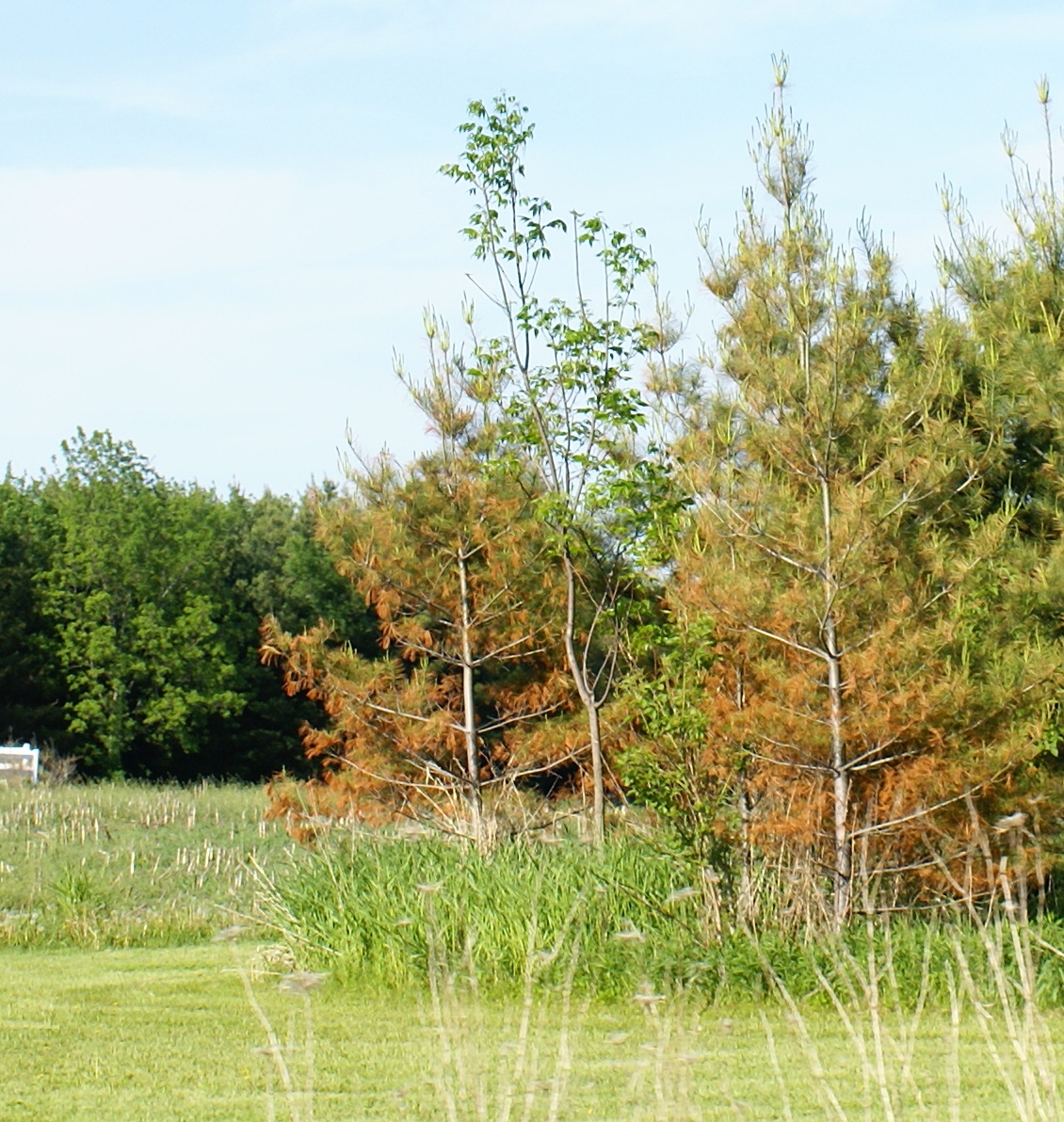
Pines fight a losing battle with needles turning from verdant green to unattractive rust.

Or worse, the needles fall out, never to return.


Think ‘Charlie Brown’s Christmas tree.’


The tall conifer looks over its shoulder one day and realizes it has developed a distinct dowager’s hump.SONY DSC

Your yew (just let that phrase roll off your tongue), along with cousins cypress and hemlock, realize they are getting bald and spindly.

And the lowly arborvitae is just a bedraggled mass of sepia-colored scales drooping from veiny branches.

SONY DSC

Brittle needles.

Unnatural color.

Unattractive veins and spindly shanks and drooping limbs.

That’s how a conifer ages.


Some of us, as we wend our way through mid-middle age, mature like hardwood deciduous trees.

Fine, elegant, stately.

And some of us, as we approach our pre-old age years, can’t help but notice we are getting scaly and droopy and rusty and prickly.

None of us have total control over how we’ll age.

It’s built into our DNA.

Plant an acorn and an oak grows.

Plant a scale-covered seed and you get a conifer.

Oak trees, maple trees, birch—they grow lovely, growing old.

Conifers just . . . grow old.

But little birds lighting on the numerous exposed branches of an old conifer don’t care what it looks like.

Their unlovely tree provides rest and shelter and doesn’t mind being swarmed with small bodies as long as the little ones don’t take the prickliness personally.

Old oaks, ancient maples, venerable elms, grizzled birches—still delight the senses with their beauty.

But the  sparrows in the branches of an aging conifer don’t care about dropping needles or sagging limbs or spidery veins.

Like Charlie Brown’s Christmas tree, the conifer might not have grown lovely, growing old,

but it has grown love.

Bless the Bandaid Solutions

SONY DSCLuxury items for those of us growing up in the 1960’s are today considered basic human rights. Cameras weren’t all pricey, but film and flash bulbs could be.
Languishing in drawers of many 60’s and 70’s households were rolls and rolls of undeveloped film, waiting till the photographer garnered enough cash to bring them to the Fotomat.
Long distance calling and pay phones meant keeping one eye on the second hand of the clock and the other on a pitiful pile of disposable income.
Today your average tween can call practically anywhere in the world as long as they stay within their parents’ minutes plan.
And they have 10 thousand photos on their phones and twice that many on their facebook pages.
You know what else your average unemployed anybody has access to?
Bandaids.

Those pinkish strips of adhesive were the crucible of wealth when I was a child. Could my friend afford a bandage on a minor scrape or bump? They must be rich.
I, on the other hand, child of a genteelly impoverished private school teacher, was always told I didn’t need a bandaid.
They were expensive.
They wouldn’t make the injury better anyway.
It just needed to be cleaned well.
This meant sanitizing it with whatever in the medicine cabinet was labelled ‘Causes Unbearable Stinging Sensation.’
Then we engaged in something called ‘letting the air at it.’

But I wanted a bandage. I wanted my dad to attain sudden wealth so we could have unlimited access to Bandaids.
Not because putting a strip of padded rubbery stuff on a scratch was a status symbol.
I was too young to care.
No.
That bandage felt like a small hug.
It relieved some pain, no matter how my thrifty, cash-strapped parents scoffed at the notion.
The wound felt safe and protected.

Bandaid solutions to major problems in the 21st century, issues ranging from obesity in overdeveloped countries to famine in third-world nations, are scoffed at.
They don’t fix the problem, we hear.
They just cover it up.
A bandaid fix serves no purpose but to ignore the festering problem.

But maybe bandaids, used with common sense, do serve a purpose when dealing with these and other issues of enormity.

Some of us feel smug when we recycle our plastic bottles.
We are saving the environment!
But we really have no idea what other resources are being used to recycle that plastic, or how much if it is ending up in landfills anyway.
Our pretty recycling bandage might hide a spreading mess that we can’t cover with an entire pharmacy of wraps and bindings.

How about the old momism that is so derided?
‘Eat your vegetables. There are starving children in the world.”
And us smart aleck offspring respond, “Fine. Let’s send my creamed asparagus to them.”

This bandage not only doesn’t solve world hunger, people say.
It creates another issue—obesity—among the ‘clean plate club.’
Maybe, though, Mom was on to something.
That bandaid was decorated with little truths:
Be grateful for what you have.
You don’t deserve it so don’t waste it as if you do.
When we appreciate the wonderful gift food is, could we resist the temptation to gorge ourselves?
Could the reproachful eyes of that starving child swim up before us, reminding us that wasting, either by tossing or overindulging, is akin to stealing?

Maybe that same appreciation of physical blessings will open our eyes to blatant consumerism. We’ll focus not so much on recycling as doing what our ancestors did:
making do with what we’ve got.
Reusing and repurposing and being thrifty and not buying what we don’t need will help clean up the messy ulcerated miasma of rubbish, with a little help from the protective bandage of recycling.

Do you throw coins in a homeless person’s cup because you saw some youtube video where everyone walked past disguised family members without recognizing them?
You might be doing worse than putting on a bandaid.
You might be pouring acid on their wound.
Some of my friends, however, started with that ‘toss in a dollar’ quick-fix mentality, but didn’t stay there.
They began living and moving among the homeless, seeing them as fellow travelers instead of causes.
They aren’t eradicating the problem of homelessness or mental illness or addiction.
They know they aren’t God.
But after the feel-good bandage came off they realized we are all messed up.
We aren’t put here to fix everyone.
We are to treat everyone with dignity and wisdom and love.
I am a zealous defender of Bandaid Solutions but that doesn’t mean we should rely on them solely.
They can make us feel good and secure for awhile, but put one on an area of the body we don’t see much, like the calf or the back of the arm, and it can languish, forgotten, while the dog bite or stab wound it covers becomes infected.
Twittering ‘Bring Back Our Girls’ made a whole host of people feel like they were doing something noble when Nigerian schoolgirls were kidnapped.
They were changing the world, one tweet at a time.
But we’ve sort of forgotten those girls.
No one recently has posted ‘Bring back our girls. Or else.’
The kidnappers pay no attention to what we over here twitter during our extensive free time.
They are too busy strapping explosives on the girls to use as unwilling suicide bombers, lambs driven to slaughter of themselves and other unwilling victims.
We either get bored of a good cause too quickly, or realize the powerlessness, even of a million tweets, to change the minds of fanatics.
That twitter bandage, though, might raise some awareness of girls being misused in our own neighborhoods.
It might make us see how children are manipulated by the media or advertising or individuals or organizations to achieve goals that have nothing to do with the welfare of that child.
They are only the sacrificial lambs to further the agenda of whoever is using them.
Maybe we’ll protest not only with clever little signs but with our actions and our checkbooks.

Protesting war—any war—seldom accomplishes anything.
Governments don’t care if you disrupt traffic while carrying placards.
Especially governments who don’t like your country to begin with.
But if, while you engage in the futile effort against violence, someone rudely rams into you, you might think twice before bringing your ‘PEACE AT ALL COSTS’ sign down on the offender’s noggin.

Here’s the thing about bandaids.
They don’t stop further hurts and wounds.
They don’t make present damage disappear immediately.
But that protection, that relief from pain, albeit temporary, can have some surprising results.
We want to do whatever minor fixes we can to help relieve the hurts of others.
It helps us remember that temporary remedies are great, as long as the underlying injury can be dealt with.
And those monumental wounds, the ones no amount of adhesive and germ killer can cover,
force us to our knees before the only One who really brings temporal and eternal healing.

Too What for What?

SONY DSCHumans are born into the world and spend the rest of their lives hearing the phrase ‘You are too old for_________’. When I trudge down memory lane, I can find the phrase ‘too old’ bumping me mercilessly from one stage of life to the next.

-I was happily floating along in my very pregnant mother, 3 weeks overdue and with no intention of going anywhere. Nature said ‘Tough. You are too old for the womb.’ And I was abruptly thrust into a world of bright lights and cold metal.

-13-month-old Me was happily going about performing my duties, clad in a comfy cloth diaper, when my mother said, ‘You are too old for diapers’ and thrust me
onto a cold potty chair.

-My 5-year-old self was happily bossing my baby brother and sister, when my parents said, ‘You are too old to stay home anymore’ and thrust me onto a yellow school bus to go to kindergarten where someone else did the bossing.

-In 6th grade my friend and I hungrily donned love beads and sashes and granny glasses and went trick-or-treating as hippies. A neighbor said, ‘You girls are too old to trick-or-treat’ and thrust mealy apples into our bags.

-13-years-old and on vacation with my family. The hotel said, ‘She is too old to stay for free. You’ll need to pay.’ My father, not anticipating this arbitrary age/rate increase, cut the vacation short.

-And so it went. I learned that junior high was too old for recess, high school too old for Nancy Drew, college too old to be carefree.

-There came a day when my stomach told me I was too old to eat chili dogs, my knees told me I was too old to sit cross-legged on the floor for hours, my brain told me I was too old to memorize much of anything.

And eventually my entire body will warn me that, while I can still try to hokey pokey, I really am too old for anything but pokey.

Yes, without a doubt, I disapprove of the phrase ‘Too old’

This morning, my uncle was told he was too old for his earthly body, and thrust, (albeit gently) into a whole new world, where he learned he would never EVER be told he was too old. Ever again.

But those of us left here learned that we are never too old to cry.


Grace for the Chatterbox

SONY DSC

A strong, silent type and a chatterbox

Recently the pastor preached on Mark 9.
Jesus took 3 disciples up a mountain.
His clothes became white as light,
God spoke audibly from heaven,
and Moses and Elijah, who had been dead several hundreds of years, came to discuss issues of life and especially death with Jesus.
It appears that while these three phenomenal, unprecedented events were occurring, James and John stood silent.
Then we have Peter.
In the pastor’s words, he suggested they build tents and camp out up there. With the Son of God and…the guys who had died.
WHY this inane comment?
Because ‘he did not know what to say…’

So, when Peter had nothing whatsoever of value to contribute to the conversation,
he opted to say something of absolutely no value.
Peter suffered from ‘Fill the Silence with Sounds Syndrome. (FSSS)
He is the patron saint of chatterboxes.

A chatterbox, to boil the definition down to its solid state, talks a lot.
Unlike politicians, who talk a lot to get elected, stay elected, or confound anyone who questions their record/stance/expense account/dalliances,
a chatterbox has no firm agenda in mind.
We don’t aspire to impart the wisdom accumulated by ourselves or others, as teachers do, and our verbiage doesn’t expound on the ultimate Word in the way of pastors.

We part our lips. A lot of stuff comes out. It is as simple as that.

Chatterboxes differ from windbags. We don’t just want to hear ourselves speak.
We aren’t egomaniacs. We aren’t driven by a need to convince you of our fabulousness.
Under that steady stream of babbling syllables often lies a bedrock of intelligence.
We do care about people, and express it is via a plethora of utterances.

Are chatterers a product of nature or nurture? No empirical data to back this up, but I’m guessing we are either/or, possibly both/and.
Just don’t assume that every chatterer you meet was born that way.
Many of us, in our essence, are wallflowers.
Tuck us in a quiet corner with a book.
Please.
But another psyche wars within us, a little harder to identify.
The nature that abhors a vacuum of silence.
Many non-stop talkers I know have a fascination with the written word.
Has it metamorphosed into a need for generating the spoken word?
Or maybe us FSSS sufferers harbor an unattractive, latent god-complex.
Anyone’s slings and arrows of outrageous fortune can be repelled if we only speak enough words over them.
Share a problem or concern with us and, even as part of our brain says, “Can you just keep quiet and listen, for pity’s sake?” our mouths are positively burbling with advice or sympathy or a similar woe shared by a great aunt.

The wisdom of the world sides with that portion of our brain begging for silence:

“Even a fool who keeps silent is considered wise; when he closes his lips, he is deemed intelligent. “ Proverbs 17:28

Aesop made the dictum pithy:
“Fine clothes may disguise, but silly words will disclose a fool”

George Eliot expanded on the adage.
“Blessed is the man who, having nothing to say, abstains from giving us wordy evidence of the fact.”

Even the Mad Hatter gets his digs in.
“I don’t think…”
“then you shouldn’t talk,” said the Hatter.

Compulsive talkers are surrounded by this kind of stuff. We want to appear wise and sage and prudent. Really we do. But like Peter, when we don’t know what to do, we say.

Quiet people suffer from no such urges. And they look like we want to. Intelligent.

But here is the problem. Say there is a party. A baby shower. The in-laws’ 50th anniversary.
One of our ilk sits down at a table with 3 or 4 silent types, each a quiet, wise-looking little iceberg.
Like the Titanic propelled on a turbine of words, our chatterbox steams into view and, unlike the Titanic, breaks the ice. While the icebergs don’t necessarily interact with each other much, they are tolerant of, and even engaging with the icebreaker.
Really, there isn’t much they need do. The chatterer will fill the air with a perpetual tumble of anecdotes and questions and comments.

At the end of the evening the quiet ones head for home. It was a successful evening. They hadn’t been bored. They could socialize gently. They haven’t appeared shy or been accused of being stuck-up.
The chatterbox leaves with her usual host of regrets.
‘I talked too much. Again’
‘I said such STUPID stuff.’
‘Why can’t I develop laryngitis?’
Chattererboxes find comfort where they can:
We are generally liked.
We can patter lightly on about almost any topic.
Occasionally we give offense—how could we not? The odds will catch up to us and we’ll eventually put words end-to-end that hurt someone’s feelings.
But it is almost always inadvertent. Our chief function is to care for others by filling empty space with syllables.

Sometimes we surprise ourselves by saying something worthwhile.
St. Peter burst out with the profession that Christ is the Son of the Living God. And even though he almost immediately blundered into saying something really, really stupid, God used this compulsive chatterer as a foundation to build His church.

Yes, there is ‘a time to keep silence.’
But blessedly, there is also ‘a time to speak;’

But is the ditch digger socialized?

Scan 141320000

Twenty years ago I thought I’d like to homeschool. I tossed the decision at my husband and he immediately tossed it back in my lap.
“You’ll be doing all the work. I’ll support you, whatever you decide.”
That is pretty much the reaction we got from both sides of the family.
“Go for it. We support you.”


Cashiers at Sam’s Club, on the other hand, were confused when I had my young sons in their store in the middle of a school day.
“Is that even legal?”
My cousin, on the  board of a small Christian school, felt betrayed.
“We lose a few more families to homeschooling and we’ll need to close our doors.’

The conversations in those early years from my husband’s co-workers ran along these lines:
“Is your wife crazy?”
“A little.”
“How can she expect them to learn anything?”
She has her teaching degree.”
“Oh.That’s OK then. But what about socialization?”

I told my husband that nothing—NOTHING—I learned in my education classes prepared me to teach at the kitchen table, but he was grateful for the degree. It kept people off his back.

Our sons got older. People would look at them with pity.
“I’m sure they benefit from one-on-one attention. But what about sports and all that stuff?”
We would respond with grace. Hopefully.
“Well, they do swimming and tennis and golf and softball and baseball with community rec, and they are part of a homeschool soccer team and basketball team and a homeschool choir and a homeschool art class.”
“Oh. That’s all right then. But what about socialization?”

Eventually I graduated all of three boys. Now people say,
“So you homeschooled all the way through? Hmmm. Brave woman. What are they doing now?”
“Well, I have one mechanical engineer and one contractor/businessman and one finishing a degree in secondary ed.” I hasten to add, “and they are all very socialized.”
Polite smiles and a little relief greet this. “Well then. That’s OK.”
I have not raised sawed-off shotgun toting social misfits after all. More importantly, they are doing jobs that MATTER. Engineering? Impressive. Entrepreneur? Admirable. English teacher-to-be? Noble.

Sometimes, just occasionally, my grace is edged out by pugnaciousness. I speculate what would happen if I answered the ‘What are they doing now?’ question as follows:
Well, I raised a ditch digger and a garbage collector and a janitor and I am so proud of them! The ditch digger digs the best ditches because someone has to dig ditches. The garbage collector is a prince among garbage collectors and considers his work a service to his fellow man. The janitor rejoices that he has control over one little section of creation and can make it shine and function as it was meant to.”

My puzzled imaginary questioner says:
“But I’ve met your boys. They seem more…gifted than that.”
“Oh, they are! They are gifted with grace. With godliness. With humility. They have the gift of caring about their coworkers and neighbors and family and friends and complete strangers.”

The hypothetical interrogator continues, slowly now, because I am apparently a bit dim:
“Yes, of course. But I meant talents that can be used to make society better. To be productive.”

“You mean”— (my internal combatant is getting snotty here)— “talent is only measured by its monetary compensation? One’s talent must be bartered for a fat paycheck? A prestigious job? Both? Who says our gifts are given to make us wealthy, or even to change the world? Can’t our gifts just enrich our little sphere and whoever is in it? Can’t our talents help us do any job better, no matter how menial our culture considers it?
“My boys aren’t defined as only a ditch digger and a garbage collector and a janitor. They know that every shovel they lift and every trash bag they grab and every toilet they clean is part of Kingdom work because they do it to honor their King and serve their fellow man.”

Of course, God doesn’t allow me to remain contrary and truculent, even in my imagination, for long. We don’t live in a society that completely grasps homeschooling.
That is OK.
It isn’t OK that homeschooling parents—any parents—believe they are only successful if they raise ‘successful’ children.

In the end it isn’t the power or prestige or the paycheck that imbues any profession with nobility.
A truly successful job is the one that serves others and honors God and is done with all one’s might.

And it never hurts to throw in a smidgen of socialization.

The Frankenstein Next Door

Say you are a tall, willowy brunette with peaches and cream skin, cornflower blue eyes and an upturned little nose. When you laugh, the listener is reminded of merry children romping through a meadow, performing catch-and-release on butterflies. The average person would gaze upon you and say, “Ah. She is a package deal. Can’t imagine changing a thing.’

SONY DSC

How a fiction writer sees the world

Unless your observer is a writer of fiction. You will be scrutinized and your pleasing internal and external parts assessed as this Dr. Frankenstein of the literary world prepares to operate. The scalpel comes out and the dissection begins. Your limpid blue eyes will be tossed in a corner atop your pert nose, and your flawless complexion cast aside willy-nilly with your chestnut locks.

All the author really wants from you is your laugh.

It will be tucked under the pseudo-surgeon’s arm, hauled to his/her latest novel-in-progress and injected into someone’s great aunt. Or a vegetarian nun. Or the mad serial killer who duped everyone with her tinkling giggle.

The diabolical nature of the fiction writer is no respecter of persons or property. A neighbor child’s Spiderman boots will be handed over to a socially misfit detective. The novelist’s sweet grandmother, who uses ginger as the secret ingredient in her blue ribbon tuna casserole, may have it snatched away, only to be credited to an Albanian dictator. The college basketball star’s loose limbs, warm brown eyes and honeydew popsicle addiction could wind up in a haughty socialite’s cocker spaniel.

Writers hoard their ill-gotten plunder to use when (or if) they see fit. They stockpile dozens of eyes in all colors, shapes and luminosities, every conceivable nose, mouth and ear form, hair in every hue from the heavens above or earth beneath. They stash a massive variety of body types, strides, voices, hobbies, and clothing. You might be horrified to find your Great-Uncle Joe’s suspenders hanging next to your retired pastor’s false teeth and your librarian’s sensible shoes parked by your mail carrier’s misheard lyrics of ‘Blinded by the Light.’

Or, worse. You recognize your penchant for examining the ear wax you’ve extracted with the tip of your pinky. And the author has given it the soap-and-water phobic hermit with 98 cats.
No one is safe from this Frankenstein of a creator who slinks here and sidles there, ruthlessly collecting bits of this one and parts of that one and a soupçon from someone else. All to be force-fed into the lifeless character languishing in the writer’s imagination. A few complex maneuvers, some mishing and mashing and a huge jolt of imaginative electricity and . . . The Creature. Is. ALIVE.

Like Frankenstein, the novelist may take one look at their resulting wretch and run screaming in horror. Writing fiction is harrowing, folks. Please refrain from gathering the townfolk and setting upon your local author with torches and pitchforks. Remember. Any resemblance to actual persons, living or dead, or actual events is purely ‘coincidental.’

What if His hem unravels?

SONY DSCI am not the crispest lettuce in the salad so I never gave intense consideration to the biblical account of the woman with the issue of blood (Mark 5:24-34) beyond pity, and relief for her happy ending.

Last month I read it again, and when I got to verse 33—But the woman, knowing what had happened to her, came in fear and trembling and fell down before him and told him the whole truth—my soggy brain said “I know why she was afraid.”

Before revealing the brainstorm, here is the rising action (also told in Matthew and Luke):
For twelve years a certain woman had some sort of hemorrhage. She paid all her money to doctors, but ended up worse off than before. She heard about Jesus. She toiled through the crowds surrounding Him because she KNEW she just needed to touch His clothing and she’d be well.
She was right. She touched the hem of his garment and was cured. INSTANTLY.
But then.
Jesus stopped. His disciples stopped. His groupies stopped. He demanded to know who touched him. The woman knew she wouldn’t get away with joining in the chorus from the exasperated pragmatists who, in essence, asked, “Are you kidding? Who hasn’t touched you?”
But she knew He knew and came forward in fear to face her Healer.

Here is where I paused. Why the fear?
Because she knew she wasn’t supposed to be among people? Or touch a man?
A Jewish woman with a twelve year issue of blood—any issue of blood—was unclean, physically and ceremonially.
No one could touch her.
She could touch no one.
She couldn’t even enter the temple to worship.

Everyone had turned from her. Family, friends, even, it seemed, a holy God. No money, no hope, no future. Just her and her issue of blood.
Physicians had failed. Remarkably, though they couldn’t take away her bloody discharge, neither could they take her faith. Or courage, or determination. My pity sprouted a seedling of respect.

This lonely, fragile, destitute woman gathered her shreds of clothing and her shards of faith, and dragged her unclean, untouchable self through a milling, chattering, surging throng of humanity. She reached Jesus of Nazareth and reached out to touch the bottom of his garment.

That was all she needed. One touch and the flow dried up immediately. She wasn’t just on the road to recovery, she was ALL BETTER. For the first time in a dozen years the blood pumping from her heart could gallop through her pulmonary valve and artery, dash to her lungs for oxygen, made a quick stop back to her heart, (beating firm and strong and steady) and leap on through valves, ventricles, aorta. Hemoglobin-drenched, it was finally put to optimal use instead of wasted in discharge.

She felt it. Full and healthy and whole and CLEAN.
But then, before she could melt back into the crowd, Jesus called her. And she had to come. Shaking.

So. Was she fearful because she knew she had violated the Law? Maybe.
But I know why I would be trembling as I drew nearer.

Those brief few moments with life in her blood and blood giving her life had been too good. Too good to last. He was going to take His healing back. She had tasted completeness just long enough to remember how lovely it was and now she’d be punished for stealing His power.

That’s why I would be afraid. Not because I had defied the law, or touched a man. But because, although faith and hope had accomplished what I sought, it would be snatched away from me. I know my unworthiness. I know the depth of uncleanness in me that has nothing to do with a body prone to blood loss and everything to do with a heart prone to deceit. Those beautiful, complete, unsoiled moments were already more than I deserved and the healing would be snatched away. I would be worse off than before.

That would be me. Not daring to love the gift too much, because I wouldn’t be able to keep it.

Whatever made her fearful, the woman who for a brief moment had been able to stand tall, fell to the ground before her Physician. She confessed everything and waited to once again feel her lifeblood drain away.

“Daughter,” the Giver said. Then she knew she would be whole and pure forever.

Wildely Tart


SONY DSC“Paradoxically though it may seem, it is none the less true that life imitates art far more than art imitates life.”
― Oscar Wilde

If dear Oscar could see art these days he may have added to the above little aphorism:
“and heaven help us all.’

Let’s start with an assumption: TV is a 21st century artform. (Work with me here)
And let’s, given the 21st century’s fascination with word smash-ups,
call this merger of
TV and art
‘Tart.’
(For purposes of this article we refer almost solely to the manifestation of Tart called ‘dramas’ since comedies make few attempts at portraying life realistically and ‘reality shows’ are so divorced from reality as to be classified ‘science fiction.’

Life, imitating Tart, would mean;

-the most dangerous job, bar none, is security guard. When, on TV cop shows, do security guards ever not get killed?

-when thieves or snoops sneak into a house, they will find it perfectly tidy, bed made, dishes done, paperwork filed and fridge shelves polished to a Turtle Wax glow.

-anyone trying to hack into someone’s (crumb-free) computer will need no more than 5 tries to figure out the private password.

-law enforcement comes to a house looking for a suspect/witness/person of interest. After 2 quick knocks and an ‘Anybody home?’ bellow they will enter via the (usually) unlatched door. And they never, ever, consider that the suspect/witness/P.O.I could be in the loo/lavatory/restroom.

-once in, there is a 98% chance they will find a dead body. Perhaps the loo was the best place to be after all.

-those desiring  a dangerous job but preferring to avoid the 100% mortality rate of the security guard profession, might consider law enforcement. Guaranteed job security (unless your network contract is up) and thrills that come from being shot, concussed, bruised, kidnapped, and compromised. Applicants should have a deep secret in their past and/or family member(s) killed by someone evil. Must be willing to devote all free time and several seasons tracking this evildoer.

-great coworkers abound, who love each other so much that they spend major holidays with each other instead of extended family.

-serial killers are more common than mudhens.

-those leaping from 2nd/3rd story windows to escape any given serial killer will land in the back of a dump truck filled with something soft and buoyant. When this cushiony substance is impacted by the escapee’s weight, a chain of dump truck events is triggered. These include the ignition turning over, gears being engaged and the unsuspecting truck chauffeuring the escapee to safety.

-cars (built according to Tart specifications) will explode on impact. Any impact.

-cars (built according to Tart specifications) self-steer. As miles of scenery whirl merrily past, the driver can chat, face-to face, with the front seat passenger.

-victim-types will go alone to a deserted spot to meet an avowed enemy, this in spite of the decades of disastrous consequences experienced by predecessor (and deceased) Tarts who did the same thing.

-anyone put in the witness protection program because something that shouldn’t have been seen was seen, will have a teenage offspring along. The offspring WILL climb out a window to meet friends and endanger themselves, the family, and national security.

-innocent types, on the run from gangsters in a city of 5 million people, will bump into them when turning a corner.

-a sports team of out of shape, clueless non-athletic, lovable quirky loser-types, in less than one season, will improve to the extent that they will beat the buff, haughty, talented jockkids who have been training in this sport since the cradle.

-pregnant women will deliver a spotless 15 pound infant after 30 minutes of labor, anywhere but a hospital and by anyone but a doctor.

And finally, because Tart is where we gain wisdom and comfort and joy—

-when one is in the midst of deepest despair and self-doubt and failure, a wise sage will offer those remarkable, magical, those life-changing words, (or what we like to call the
SweetTart):
“I believe in you. Now you must believe in yourself.”

Too bad the tragic Oscar Wilde didn’t have Tart around to imitate.

Synecdoches, Synecdo-don’ts

SONY DSC

Next time some literary snob type tells you, in a world-weary sort of tone:
“ I suppose you don’t know what a synecdoche is,”
You can answer:
“Everybody knows that. Synecdoches form images in our minds with a convenient sort of shorthand. They help create our understanding of the entirety via a glimpse of only one part. So there.”

‘Synecdoche’ possibly isn’t one of your top 100 daily words.
(But if you want to haul it out at your next party make sure you pronounce it right.
Sort of like Schenectady)
Your synecdoche-comprehension is, however, perfect.
If I told you I got a ‘new set of wheels’ you wouldn’t congratulate me on a tire purchase.
You’d know I was talking about my (mythical) new car.
You celebrate with bubbly, sign your John Hancock, count heads and pay with plastic and you are a MASTER of the synecdoche.
‘All hands on deck’ demands more than just hands, but isn’t it so much more fun than asking all competent personnel to come topside? A Romeo and Juliet couple is headed no place good and if someone calls you Charlie Brown they don’t necessarily mean you are well-drawn.

Charlie Brown carries the burden of all lovable losers on his narrow shoulders. He can handle it. He’s made of ink, for goodness’ sake. A Venus is a synecdoche for lovely women while a Jane Eyre-type is plain but will get the blind bigamist in the end. It’s OK. The originals aren’t real. Elmer Fudd can be a stand-in for cartoon hapless hunters but don’t think for a moment he represents the whole of the real world of hunters.

With all that said, let’s check your synecdoche prowess.
‘Single mother’ What pops into your head?
How about ‘Homeschooler?’
‘Young black male?’
Is your brain ready to explode with the millions of different single moms, homeschoolers and young black men?
Are you shouting,
“Is that Tuesday Prude crazy? How can one single mom possibly stand for all single mothers? How can one homeschooled kid or young black male create our understanding of the whole?”
You know it isn’t possible.
Not everyone has your grasp of the obvious.
Some will take a hard-working single mother and use her to convince us that ‘single mother’ is synonymous for ‘hard-working.’
Someone whose identity has been stolen by a single mother will use her as a synecdoche for every single mother.
Kids schooled at home are kids. Some neatly dressed who call adults m’am or sir, some with Supreme Court-level comprehension of the Constitution, some playing video games all day in their pajamas. But there are folks out there—really, I have met them—who assume that the single homeschooler they’ve had access to must represent all those who are homeschooled.

Wisecracking Will Smith-type rascals, noble George Washington Carvers/Martin Luther King Jrs, or hardened African American gang members are incapable of helping us comprehend that entire elusive classification of ‘young black male.’
One single mom can’t represent all single moms. No woman can bear that burden. Since homeschooled kids are as varied as otherly-schooled youngsters it would be an impossible waste of energy to find one synecdoche for the whole.
Young black men, like young black women (or whatever hue or gender) face enough challenges. They barely know themselves. Heaven forbid one of them function as stand-in for everyone in their bracket.

Synecdoches make great figures of speech but lousy stereotypes.
Like literary device elitists, they must be kept firmly in their place.