
But is the ditch digger socialized?

Scan 141320000

Twenty years ago I thought I’d like to homeschool. I tossed the decision at my husband and he immediately tossed it back in my lap.
“You’ll be doing all the work. I’ll support you, whatever you decide.”
That is pretty much the reaction we got from both sides of the family.
“Go for it. We support you.”


Cashiers at Sam’s Club, on the other hand, were confused when I had my young sons in their store in the middle of a school day.
“Is that even legal?”
My cousin, on the  board of a small Christian school, felt betrayed.
“We lose a few more families to homeschooling and we’ll need to close our doors.’

The conversations in those early years from my husband’s co-workers ran along these lines:
“Is your wife crazy?”
“A little.”
“How can she expect them to learn anything?”
She has her teaching degree.”
“Oh.That’s OK then. But what about socialization?”

I told my husband that nothing—NOTHING—I learned in my education classes prepared me to teach at the kitchen table, but he was grateful for the degree. It kept people off his back.

Our sons got older. People would look at them with pity.
“I’m sure they benefit from one-on-one attention. But what about sports and all that stuff?”
We would respond with grace. Hopefully.
“Well, they do swimming and tennis and golf and softball and baseball with community rec, and they are part of a homeschool soccer team and basketball team and a homeschool choir and a homeschool art class.”
“Oh. That’s all right then. But what about socialization?”

Eventually I graduated all of three boys. Now people say,
“So you homeschooled all the way through? Hmmm. Brave woman. What are they doing now?”
“Well, I have one mechanical engineer and one contractor/businessman and one finishing a degree in secondary ed.” I hasten to add, “and they are all very socialized.”
Polite smiles and a little relief greet this. “Well then. That’s OK.”
I have not raised sawed-off shotgun toting social misfits after all. More importantly, they are doing jobs that MATTER. Engineering? Impressive. Entrepreneur? Admirable. English teacher-to-be? Noble.

Sometimes, just occasionally, my grace is edged out by pugnaciousness. I speculate what would happen if I answered the ‘What are they doing now?’ question as follows:
Well, I raised a ditch digger and a garbage collector and a janitor and I am so proud of them! The ditch digger digs the best ditches because someone has to dig ditches. The garbage collector is a prince among garbage collectors and considers his work a service to his fellow man. The janitor rejoices that he has control over one little section of creation and can make it shine and function as it was meant to.”

My puzzled imaginary questioner says:
“But I’ve met your boys. They seem more…gifted than that.”
“Oh, they are! They are gifted with grace. With godliness. With humility. They have the gift of caring about their coworkers and neighbors and family and friends and complete strangers.”

The hypothetical interrogator continues, slowly now, because I am apparently a bit dim:
“Yes, of course. But I meant talents that can be used to make society better. To be productive.”

“You mean”— (my internal combatant is getting snotty here)— “talent is only measured by its monetary compensation? One’s talent must be bartered for a fat paycheck? A prestigious job? Both? Who says our gifts are given to make us wealthy, or even to change the world? Can’t our gifts just enrich our little sphere and whoever is in it? Can’t our talents help us do any job better, no matter how menial our culture considers it?
“My boys aren’t defined as only a ditch digger and a garbage collector and a janitor. They know that every shovel they lift and every trash bag they grab and every toilet they clean is part of Kingdom work because they do it to honor their King and serve their fellow man.”

Of course, God doesn’t allow me to remain contrary and truculent, even in my imagination, for long. We don’t live in a society that completely grasps homeschooling.
That is OK.
It isn’t OK that homeschooling parents—any parents—believe they are only successful if they raise ‘successful’ children.

In the end it isn’t the power or prestige or the paycheck that imbues any profession with nobility.
A truly successful job is the one that serves others and honors God and is done with all one’s might.

And it never hurts to throw in a smidgen of socialization.
The Frankenstein Next Door

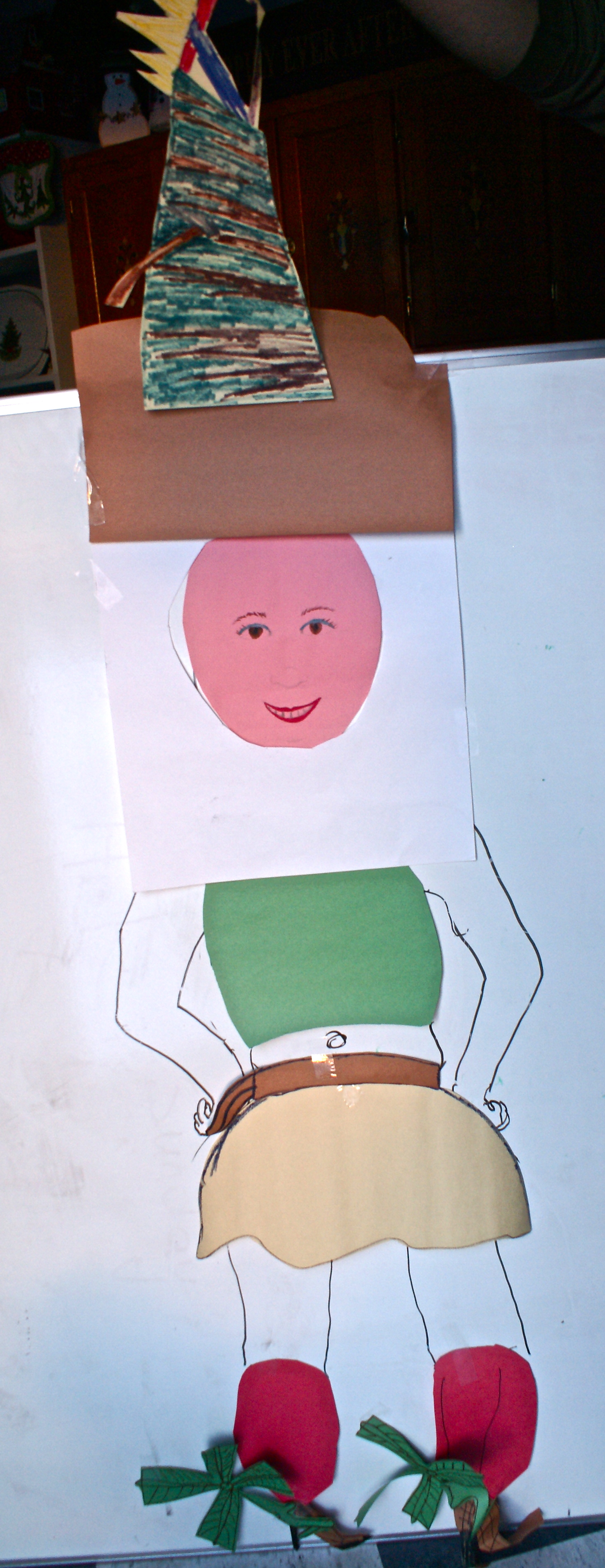
Say you are a tall, willowy brunette with peaches and cream skin, cornflower blue eyes and an upturned little nose. When you laugh, the listener is reminded of merry children romping through a meadow, performing catch-and-release on butterflies. The average person would gaze upon you and say, “Ah. She is a package deal. Can’t imagine changing a thing.’

SONY DSC

How a fiction writer sees the world

Unless your observer is a writer of fiction. You will be scrutinized and your pleasing internal and external parts assessed as this Dr. Frankenstein of the literary world prepares to operate. The scalpel comes out and the dissection begins. Your limpid blue eyes will be tossed in a corner atop your pert nose, and your flawless complexion cast aside willy-nilly with your chestnut locks.

All the author really wants from you is your laugh.

It will be tucked under the pseudo-surgeon’s arm, hauled to his/her latest novel-in-progress and injected into someone’s great aunt. Or a vegetarian nun. Or the mad serial killer who duped everyone with her tinkling giggle.

The diabolical nature of the fiction writer is no respecter of persons or property. A neighbor child’s Spiderman boots will be handed over to a socially misfit detective. The novelist’s sweet grandmother, who uses ginger as the secret ingredient in her blue ribbon tuna casserole, may have it snatched away, only to be credited to an Albanian dictator. The college basketball star’s loose limbs, warm brown eyes and honeydew popsicle addiction could wind up in a haughty socialite’s cocker spaniel.

Writers hoard their ill-gotten plunder to use when (or if) they see fit. They stockpile dozens of eyes in all colors, shapes and luminosities, every conceivable nose, mouth and ear form, hair in every hue from the heavens above or earth beneath. They stash a massive variety of body types, strides, voices, hobbies, and clothing. You might be horrified to find your Great-Uncle Joe’s suspenders hanging next to your retired pastor’s false teeth and your librarian’s sensible shoes parked by your mail carrier’s misheard lyrics of ‘Blinded by the Light.’

Or, worse. You recognize your penchant for examining the ear wax you’ve extracted with the tip of your pinky. And the author has given it the soap-and-water phobic hermit with 98 cats.
No one is safe from this Frankenstein of a creator who slinks here and sidles there, ruthlessly collecting bits of this one and parts of that one and a soupçon from someone else. All to be force-fed into the lifeless character languishing in the writer’s imagination. A few complex maneuvers, some mishing and mashing and a huge jolt of imaginative electricity and . . . The Creature. Is. ALIVE.

Like Frankenstein, the novelist may take one look at their resulting wretch and run screaming in horror. Writing fiction is harrowing, folks. Please refrain from gathering the townfolk and setting upon your local author with torches and pitchforks. Remember. Any resemblance to actual persons, living or dead, or actual events is purely ‘coincidental.’

Lily-Livered Literary Devices

Real life wreaks havoc with perfectly good literary devices.
In the hands of professionals, these devices make the world of literature a finer place.
When rank amateurs throw them around, the term ‘verbal abuse’ takes on a whole new meaning.

The simile, saying something is like something else, requires an imaginative mind and clarity of expression:
He uttered a sound much like a bull dog swallowing a pork chop whose dimensions it has underestimated. (PG Wodehouse)
Let an American teens get hold of it and the simile turns into:
‘I was like, just standing there and he, like, winked at me and I, like, died!’

When Edna St. Vincent Millay wrote, “I like humanity, but I loathe persons.” she was brilliantly employing an oxymoron.
When we speak of government intelligence or peacekeeping force or media integrity or red licorice we just use one word in the phrase to cancel out the other.

Anthropomorphism, attributing human characteristics to animals (sometimes interchangeable with personification) raises our consciousness with totalitarian critters in ‘Animal Farm’ or raises an entire generation of anti-hunting protestors with ‘Bambi.’
Now, commercials try to work up sympathy for lonely cleaning products pining for love in attics. Movies like ‘Toy Story’ and ‘Brave Little Toaster’ convince us that we can’t throw out broken plastic playthings or obsolete appliances because they have feelings too. That just raises my blood pressure.

Euphemisms. Ah. A way to take something prosaic, unpleasant or distressing and make it palatable.
Lucy wasn’t pregnant in ‘I Love Lucy.’ She was expecting. Sometimes women in the 1950’s were in the family way or on the nest or visited by the stork but they were NEVER pregnant.
‘The Godfather’ movies made threatening the life of another sound positively appealing by ‘making someone an offer they can’t refuse.’
See how clever these euphemisms are?
Compare them to the politician who has lied, cheated and stolen. Will he admit to lying, cheating etc? No. He will admit that ‘mistakes were made.’
Collateral damage, friendly fire and enhanced interrogation all have a pleasant ring to them.
Someone had the bright idea to call  taxes ‘revenue enhancements.’
See how clever those euphemisms are?

Portmanteau is that fun little device that joins 2 words to make a new word. Lewis Carroll combined ‘lithe’ and ‘slimy’ to make the great word slithy in Jabberwocky. Smog? I can handle that. Motel? Very clever. How can human beings who come up with a delight called brunch also have infomercials and Brangelina and TomKat?

Invective. If you have ever read the comment section on YouTube videos, blogs, opinion columns,  etc., you’ve probably run across invective. Invective is that nasty, spiteful, lewd, venom-dripping-from-each-word sort of response Internet trolls like to use. Like real trolls, these scourges of social media have a limited vocabulary and use the same 4 letter words over and over and over.
Compare invective in the hands of a master. Shakespeare’s King Lear addresses his faithless daughter’s servant as such: “A knave, a rascal, an eater of broken meats; a base, proud, shallow, beggarly, three-suited, hundred-pound, filthy worsted-stocking knave; a lily-livered, action-taking, whoreson, glass-gazing, super-serviceable, finical rogue; one-trunk-inheriting slave; one that wouldst be a bawd in way of good service, and art nothing but the composition of a knave, beggar, coward, pander, and the son and heir to a mongrel bitch: one whom I will beat into clamorous whining if thou deni’st the least syllable of thy addition.”(William Shakespeare “King Lear”, II.2)
Maybe when Internet trolls start using words like ‘ beggardly’ and ‘lily-livered’ and ‘filthy worsted-stocking knave’ we can take them more seriously.