Can Bombs Burst in my Hair?

SONY DSC

Bonny

Here is my pup.

Awwww, you say, she is so cute!
What doesn’t show up on photos is the yellow streak running down her back, her lily liver, or her chicken attitude.

SONY DSC

The little girl is a coward.

Now firecracker season is upon us and I’ll spend the next several days trying to convince the pup that the Fireworks are Not Out to Get Her.

SONY DSC

The pup won’t believe a word.

We’ll head out to fireworks tomorrow night. Without her. We’ve learned from the experience of the last several years.

We would weigh our options:
1) Take her along into the thick of the battle, where at least we can hold her and try to comfort her?
Or
2) Leave her home alone, where she can hear the bangs and booms, but in a more muted form?
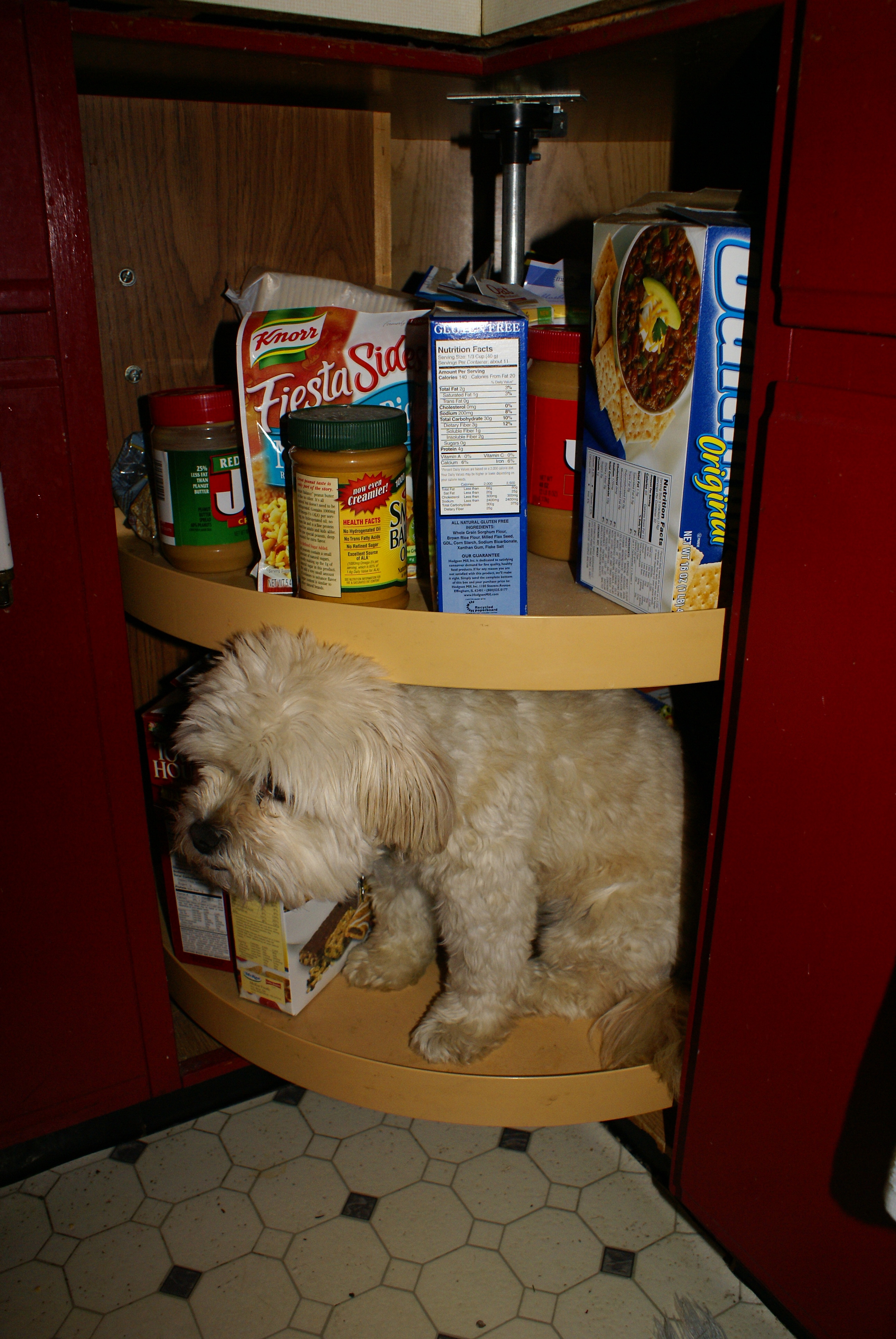
When she is home and hears the pop of a gun, a backfiring car or–heaven forbid–continuous fireworks set off by patriotic neighbors, she panics and tries to insert herself into the smallest hole in the deepest corner of the house.
SONY DSC

If she could, she would stuff her paws in her ears.

We worried that someday we would return from fireworks to discover the dog with only her nose sticking out of a toilet paper tube.

So we would take her along.
This is what ensued:

Family: “Oh look, Doggie! Fireworks in the sky! Far away! Aren’t they pretty?
Family Dog: “Not again! We just went through this 7 dog years ago!”

DSC03395

Family: “You’re OK! See? We’re cuddling you tight!”
Family Dog: “If you really loved me you would throw yourself of top of those bombs.”

SONY DSC

F: “It’s almost over! You can make it!”
FD: “Possibly…if that gopher over there will share his hole with me…”

F: “All done! Let’s go home!”
FD: “Could you check and make sure I still have all my extremities? Oh, and by the way. You’ll be hearing from my SPCA representative.”

SONY DSC

We’re leaving her home this year, and working on a new business venture. Soundproof pet cages.

Gluten Hoppers

preview

In my imagination, this cleverly drawn little rock hopper looked more impressive as a headliner.

Your best friend loves White Chocolate Raspberry Layer Cake. For her birthday you make one. From scratch. No Betty Crocker, no canned frosting. Only the best and freshest $15 worth of ingredients for your BFF.
“Surprise!” you say. “I baked you a cake!”
You sense something is wrong by her sheepish grimace and pained eyes.
“Oh, thanks awfully,” she says. “I guess you hadn’t heard I’ve gone gluten-free.”

The next year you scavenge the internet for gluten-free recipes. You find one and buy $25 worth of ingredients to make wheat-free cake. You box it up and wrap with bright ribbons and shiver in anticipation of her happy face and happier intestinal tract.

At her birthday dinner she eats every roll in the bread basket and orders fried chicken. Which is chicken dipped in flour. Wheat flour.

“Can you eat that?” you ask, as she requests a refill on the rolls. “Aren’t you gluten-free?”

She scrunches up her eyes as if trying to recapture some faraway memory. “Sort of. Sometimes. Look! They have White Chocolate Raspberry Layer Cake! Want to split one?”

You actually want to split the $25 gluten-free cake over her head. The following year you get her a gift card from Bath and Body Works.

Some people really can’t eat gluten. Really. They may have Celiac’s Disease and gluten does nasty things to them. Some are severely sensitive to wheat and its cohorts. They read food labels with more fervor than a bookie analyzing the point spread.

Then there’s the rest of us—not so much gluten-intolerant as gluten-irritable. We don’t resist gluten on a consistent basis; it’s more like an open marriage. Some days we are true to our vows. Wheat will not pass our lips. We trust our guts and our guts feel pretty decent. But when a bagel rolls by, winking and crooking its finger at us, we slather on cream cheese and we eat. We are happy. Deliriously so.

Until the regrets—the bitter fruit of Yielding to Temptation. It starts with a feeling in the pit of the stomach. Gurglings and rumblings, headaches and fatigue, or just garden-variety guilt. It reminds us for hours and sometimes days that gluten is not our friend. And we swear to once again avoid even the appearance of any dalliance with that yeasty, aromatic, mouth-watering…sorry.

Gluten-hoppers are annoying. We admit it. We are inconsistent. Truthfully, some of us aren’t even absolutely positive that the stuff giving dough its delightful elasticity is the stuff that makes us feel lousy. So we hop from rock to dietary rock trying to escape Mt. Vesuvius as it threatens to erupt in our innards.

We just want to feel good. Be patient with us in our quest to find the Mt. Everest for digestive systems. When we find it, we hope it will have White Chocolate Raspberry Layer Cake.

Man’s Work

Scan 150770002

Daddy (who would have been 100 this Friday) had a wealth of old sayings, aphorisms and proverbs.

One he quoted often while looking fondly at Mom:

“Man’s work goes from sun to sun, woman’s work is never done.”

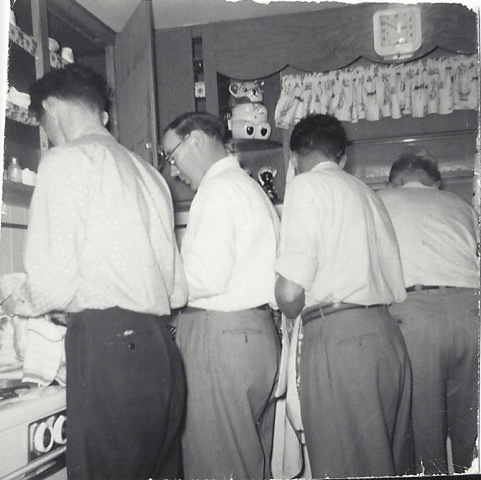
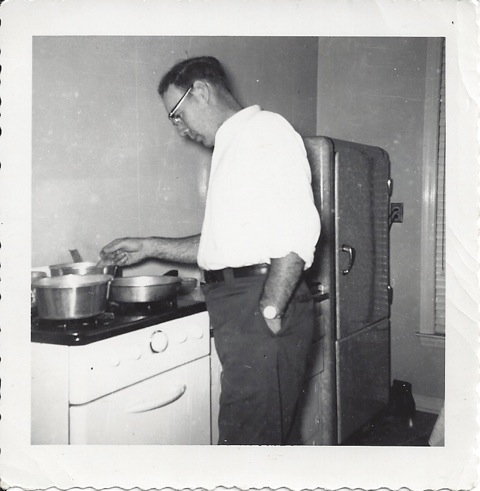
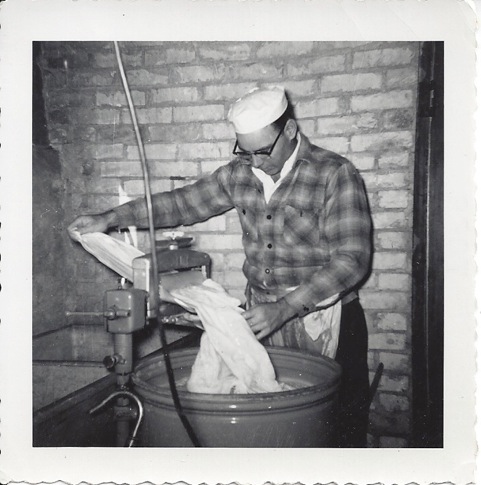
We never quite made sense of that, since Mom, for most of her adult life, worked outside the home, while Dad made dinner, did dishes and laundry, yard work and handyman stuff.

Scan 150770000

But despite all evidence to the contrary, old sayings are old sayings. And Dad believed every pithy word.Scan 150770001

When you’ve only got 100 years to—

This week, had he lived, my dad would have turned 100.

It was hard to let him go. I’d take him back in a heartbeat, but I know he wouldn’t come.

But I see him everywhere. Not just in the way-too-many-but not-nearly-enough photos I have of him. In the redwing blackbird I spotted. For him that was the true harbinger of spring.

There are bits of him in all three of my boys.

Favorite hymns, harmonicas and accordions.

And whimsey.

Here is one of his favorite sayings:

“A PLACE FOR EVERYTHING AND EVERYTHING IN ITS PLACE”

Here is one of my favorite photos:

dad spaghetti

He dropped a box of spaghetti in the pantry. It wasn’t edible. What to do, what to do?

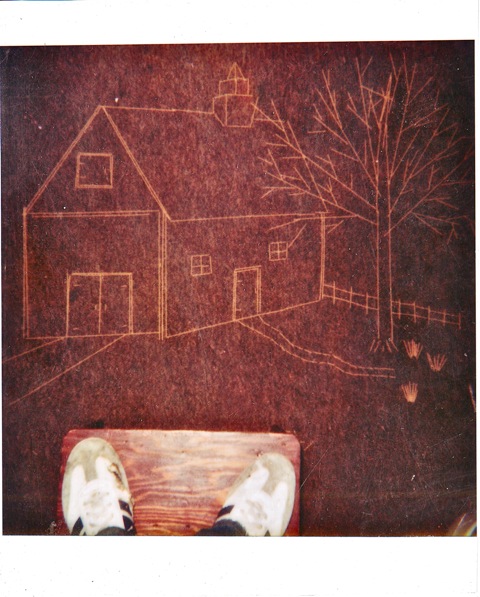
And here is the answer. The place for spilled spaghetti. According to a 70-something retired schoolteacher. (And preserve it for posterity with a Polaroid)

Mom said they had to walk around the spaghetti house  for a week.

Sibling Rivalry

DSC01357

A Christian (let’s call him Christian) walks into a coffee bar.
He sees a woman, head bent over her Bible, reading and taking notes. His heart leaps. Like calls to like as he realizes that, although he has never seen her before, she is his sister. His sister in Christ.

He hesitates at her table. When she looks up with an open and welcoming smile, he says, “I see you are reading the book of Matthew. Are you a believer?”

She responds with a happy affirmative, introduces herself as Christiana, and asks him to join her.

The conversation starts slowly:
“How long have you been saved?”
“What’s your favorite book/verse/passage?”

They dance around “Where do you go to church?” knowing the answer could lead to one of those family arguments about which sibling’s doctrine is better than the other. Or worse. What if the other is a heretic? A black sheep of the family?

After tiptoeing around the edges of the theological crevasse they realize that, in spite of some differences in non-essentials, what unites them is greater than what divides.

The conversation continues with gusto. They compare favorite sermon topics, debate merits of hymns or contemporary praise-n-worship songs, free-form services or liturgical, sprinkling or dunking, heads bowed or hands held high.

Family business taken care of, they get personal. Christiana describes how she was raised by atheists and just last year had a Damascus Road sort of conversion after seeing a billboard that read “Amazing Grace: Not just for bagpipes.”
Christian reveals that he is the son of believers, raised by believers, who were umpteenth-generation believers.
They again compare notes. Enthusiasm of the fresh convert or quiet, deep conviction of one raised in the faith.

They’ve reached the part of the conversation where they begin speaking of how great their mutual Father is. All the awesome stuff He does for them. Caramel macchiato and spiced chai latte grow lukewarm, then cold as brother and sister in Christ move from generals — Grace! Forgiveness! Eternity! — to specifics.

Christiana reveals at least a dozen times in the past year, when she thought she was out of money, envelopes with cash showed up in her mailbox.

Christian, whose hours at work have been slashed so drastically that he’s taken a second job flipping burgers, forces sincerity into his smile.

But then he remembers how, when his grandfather died, when his wife miscarried, he’d been filled with a supernatural peace that passed understanding. They had, he knows, died in Christ. He shares this with Christiana, whose unsaved parents died within a year of each other and she’s still coming to grips with the fact that she will never see them on either side of eternity.

But! She’d suffered from chronic back pain since a freak accident involving a teeter totter, an outsized friend and an irritable hummingbird. Her pastor led a group in prayer and laying on of hands and she was immediately free from the torment.

Christian feels his smile freeze into position. He’s been dealing with IBS and eczema since he was young, and no amount of sincere and faith-filled prayer had taken them away.
Conversation lags. They both make attempts to restore the fraternization they’d enjoyed at the beginning. Christiana tells of more miraculous interventions. Christian counters by affirming trust that grows in spite of thorns in one’s side.

Christiana bundles her Bible and notebook into her knapsack. She gives Christian a philadelphia sort of hug and says she’ll be praying for his eczema. (He’d chosen not to bring up his IBS.) Her Father had said that ‘all His promises have their yes in Christ!’ she adds brightly.

With a stiff upper lip Christian promises to pray too, that her faith will mature and she’ll soon be enjoying spiritual meat in addition to her milk diet.

As he hands her a pencil that rolled on the floor he thinks “The babies of the family get spoiled. Makes ‘em soft”

She thanks him and volunteers to clear their cups and napkins from the table, reflecting that the oldest kids in the family always seem overbearing.

They wave goodbye and go their separate ways, each one wondering, “Who does Father love best?”

Garfunkel isn’t all you need

Some of those childish dreams and cringing humiliations of our past need to be pulled out and gently chuckled over. It helps exorcise them. This particularly mortifying bogie has now been relegated to a manageable discomfiture. But youthful foolishness can bear the fruit of adult insight.

SONY DSC

A song, I realized that fateful night, wasn’t going to change the world. At least not via me. I couldn’t sing, for Pete’s sake. Why hadn’t anyone told me? I couldn’t play guitar. (Actually several people had told me this, but I  assumed they just hadn’t heard me at my most soulful.) I had bullied my friend into supporting a naive and humiliating venture in futility. Worse, people had witnessed it. People I didn’t know.

It would be years—decades—before I began to comprehend the hopeless mess we humans are, the mess we’ve made of the world, and the nastiness we inflict on each other. Nothing we could generate from inside our grimy broken selves, no matter how pretty and sincere, could change ugliness and evil. We require something—SomeOne—outside of us.
Once we realize that, we needn’t feel frustration about our inability to change the entire world. We can, however, change the parts of it in which we live and move and have our being.

We work at being good friends, like Nan.
We do our best, like my Calvinette leaders, to guide silly, giggling pre-pubescent girls with love and grace.
We enjoy beauty and truth, because by God’s common and uncommon grace, it is everywhere.

God made the music of the spheres to begin with, He keeps the song going in spite of raspy voices and broken strings, and He’ll make the song new and perfect someday. He just requires that we hum along faithfully in our own spheres, whatever their size and scope.

As for my preteen self? Did I wallow in self-pity? Of course. For at least 36 hours. But there was more Simon and Garfunkel to enjoy, some Montego Bay and Mungo Jerry, and a glorious first crush on David Cassidy. Changing the world could wait. My pillow transformed into Keith Partridge each night and I covered him with chaste, closed-mouth kisses. I was becoming typical. My parents breathed a sigh of relief.

Late that year, I misplaced my little yellow transistor radio. Then I ran out of requisite-size battery. Finally, my father remembered to buy a pack of 9 volts and my little radio was ready to rumble. Maybe, I hoped, maybe ‘I Think I Love You’ will be the first song I hear. I tuned to WCFL, locked my bedroom door and turned up the volume.

For the first time, singing only for me, Neil Diamond’s ‘He Ain’t Heavy…He’s My Brother’ crooned its way through my little transistor and into my heart.

The next day I dusted off my old string of love beads and wrote a fan letter to the Peace Corps.

Changing…Garfunkel…

SONY DSC

Last week I shared my pre-teen dream of achieving peace and love via Simon and Garfunkel’s ‘Sounds of Silence.’ It remained just a beautiful dream until I learned that my Calvinette troupe would be hosting the Calvinette banquet. And I knew what had to be done.

What is a ‘Calvinette?’ Pretty much what it says. A little, female follower of John Calvin. Although we owed more to the Girl Scouts than we did the worthy reformer. My particular Calvinist denomination had a Calvinette troupe in each church. Sort of like Awanas for preteen girls. We had a motto. (Grace is deceitful and beauty is vain, but a woman who fears Jehovah, she shall be praised.) We had a song. ‘Oh Calvinettes March Forward.’
We got badges. I learned to darn a sock over a lightbulb. And every year or so, all the Calvinettes in the state came together for a banquet. As hosts this year, our duty was to provide entertainment.

There was the plum. Sitting in my lap, smiling up at me. “You need a place to start changing the world? Here you go!”
Almost a hundred other junior high girls would be there. They would hear ‘Sounds of Silence.’ It had been off the airwaves since we were mere third graders. But now, on the cusp of teenhood, the world would soon be ours. WE COULD MAKE IT NICE. Every girl in that room couldn’t help, on hearing The Song, to be moved. To go home and cry. And then begin the change that would change everything.
I gathered my friends to share my vision. My vision may have lost something in translation, but no one argued when I suggested that, as the Dream-transmitter, I would sing lead and accompany on guitar. Like polite girls (Calvinettes were well-mannered and supportive) my friends agreed. There were half a dozen of us united on this giddy venture to set world kindness in motion.

At the first practice, only 5 girls showed up. The second had 4 and by the third, it was me and my friend Nan. Who I forbade, on the force of my (actually underwhelming) personality, to drop out.

Why, when offered a chance to achieve greatness and love and flowers and puppies via a song, did those Calvinettes skedaddle? Some had parents who, foreseeing disaster, wouldn’t let them participate. The rest were smitten by self-preservation combined with common sense. Did I mention that I am thiscloseto tone deaf? And that my guitar prowess was the result of 6 half-hour lessons?

Poor Nan. She tried everything to make our duo work. “How about I sing harmony?”
Did you know that to the musically-impaired, harmony sounds like a pig wailing over a stolen corn cob?
I laughed her to scorn. Me. Who had the nickname ‘Gravel Gurdy’ as a child.

But she hung in there, agreeing to sing melody. An octave higher than me.
The night came. THE NIGHT. The night when the tentacles of love would go out and—

“Girls.” One of our long-suffering Calvinette leaders beckoned Nan and I into a private corner. Just before the festivities began.
“We’ve been listening to the lyrics.” Her matter-of-fact tone didn’t fool us. It concealed the deep discomfort of an adult addressing juveniles on carnal matters. “The verse about ‘written on the subway walls’ is not appropriate.”
We looked at her blankly. We barely knew what a subway was. She fidgeted and straightened my Calvinette scarf. “It isn’t nice.”
We obviously were not getting it. She sighed.
“Subway walls have things that aren’t…appropriate…written on them. You’ll have to eliminate that verse.”

My vision of a brighter future crumbled at the edges. But I would not give in. I would not let the music die.

Our names were announced.
Nan stood with the air of one facing the guillotine. I marched forward, guitar hugged to my ribcage.
We turned to face a sea of 11-13 year old female faces. Our Calvinette leaders’ faces were buried in their hands.
I plucked at strings for the opening I’d painstakingly created.

I strummed. I sang. Somewhere around the key of ‘bottom of a deep dark pit.’

Nan, thankful that video phones and youtube were decades in the future, was possibly singing, or possibly just frozen. I couldn’t tell. The blood burbled in my ears and drowned out even my own rumbling tone.
We stopped signing abruptly, just short of the final verse. I faded out with the same soulful, ‘I’m a Little Teapot’ sort of notes I’d started with. The audience sat stunned. I was surrounded by the sounds of silence. Then, grateful it was over, my kind-hearted Calvinette leaders began to clap. The rest of my club joined, and soon the entire room was gently patting their hands together.

Nan and I found our ways to our seats. Banquet-type stuff happened. I went home. But something died in me that night. Right about the second verse of ‘The Sounds of Silence.’

Please come back tomorrow to learn the moral of the story.

Aging Like a Conifer

‘Let me grow lovely, growing old”

is a poem by Karle Wilson Baker, which I’m not sure I can reprint because I’m not sure it’s public domain. (Prudes thrive on assessing and evaluating each potential action they might take, then searching for laws that could prohibit such action.)

The poem goes on to extol other beautiful, fine old things, like lace. Trees make the list.

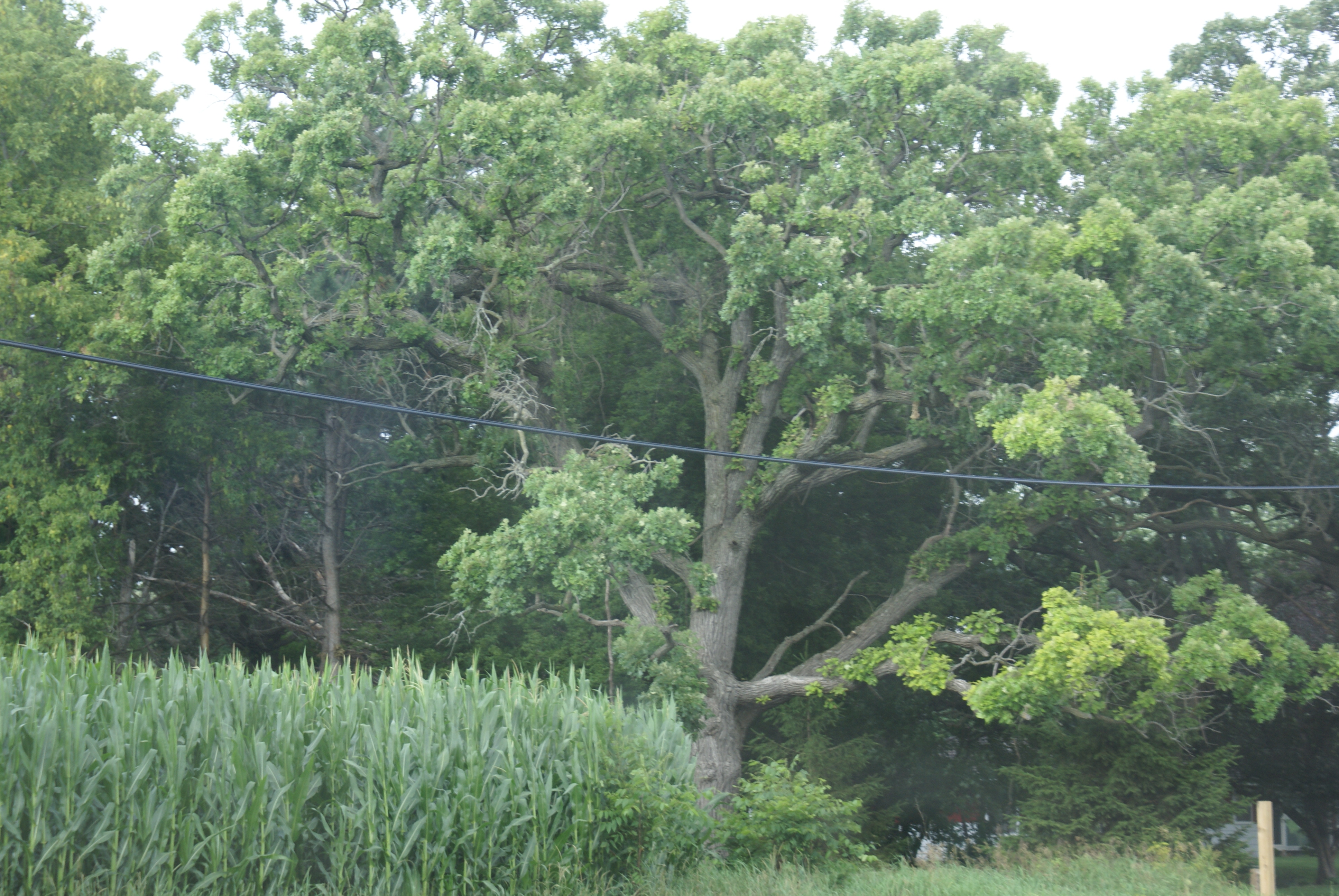
Oak trees grow lovely, sure.SONY DSCMaples? You bet.

The venerable weeping willow droops gracefully as she sheds her final tears. SONY DSC

Elms, even those untidy, drop-their-messes-everywhere mountain ashes—

hardwoods wear their age well.


The leaves these old deciduous trees dropped the previous autumn might not all be replaced in the spring. Come late summer, their scant leaves fade into fall hues even as their younger compatriots still flaunt green foliage.SONY DSC

But sparser leaf covering serves only to accentuate the splendid outlines of these trees.

There is dignity in the gnarled, scarred trunks.

Branches, some of them more fragile now, still extend with grace and beauty. More of the basic structure is being revealed, and it is beautiful.

The deciduous tree is stately.

Its oldness has a fine quality.

Even the most elderly of these, naked and alone, can provide a perch for the majestic bald eagle.

SONY DSCWhat about the aging conifer?

With the exception of the giant redwood, maybe the grand cedars of Lebanon, very few elderly needle-producing, cone-bearing softwoods inspire poets.

SONY DSCA spruce, on exiting middle age, gets all prickly and irritable and begins to drop things.

The ancient fir suddenly realizes he is more bark than bite.

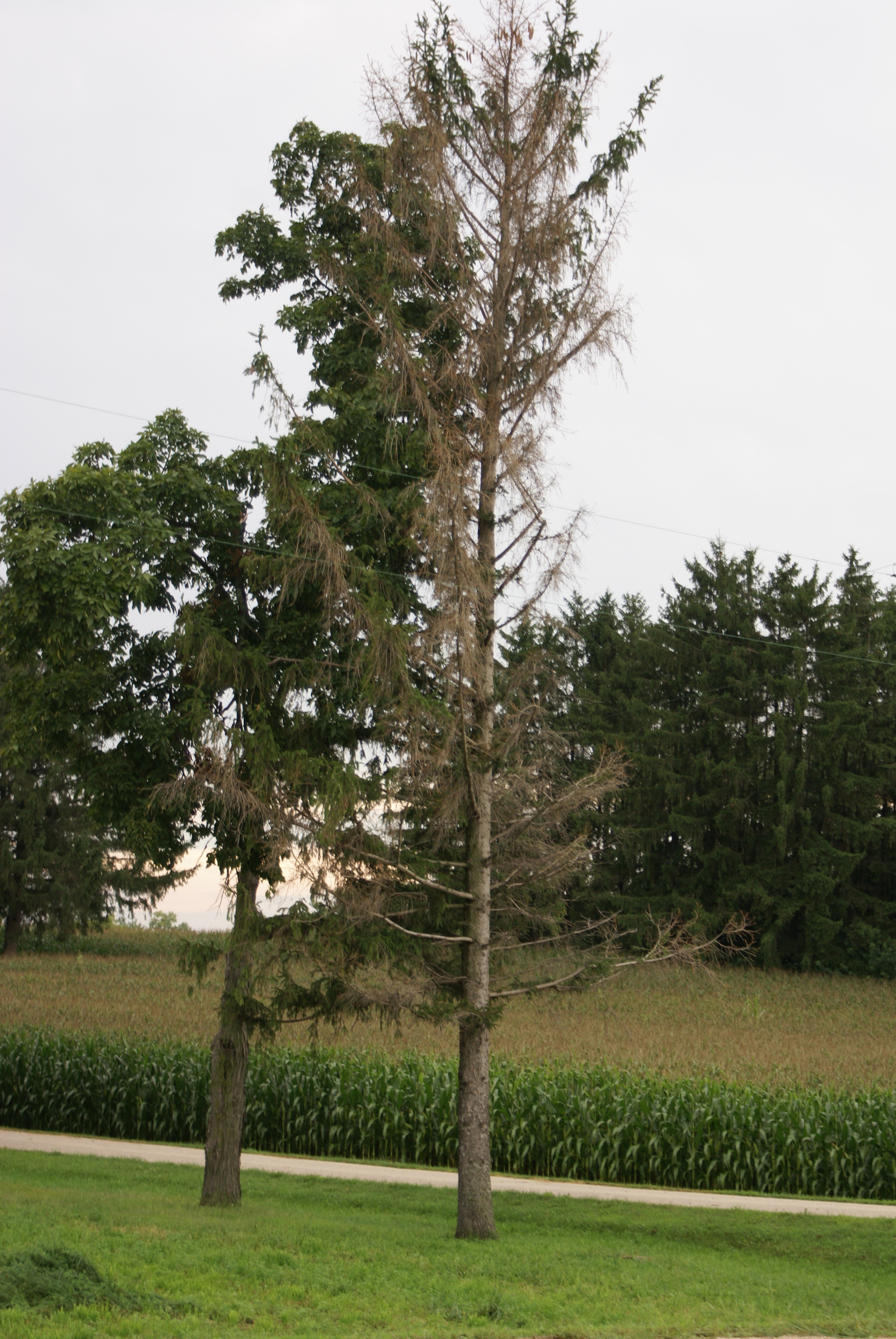
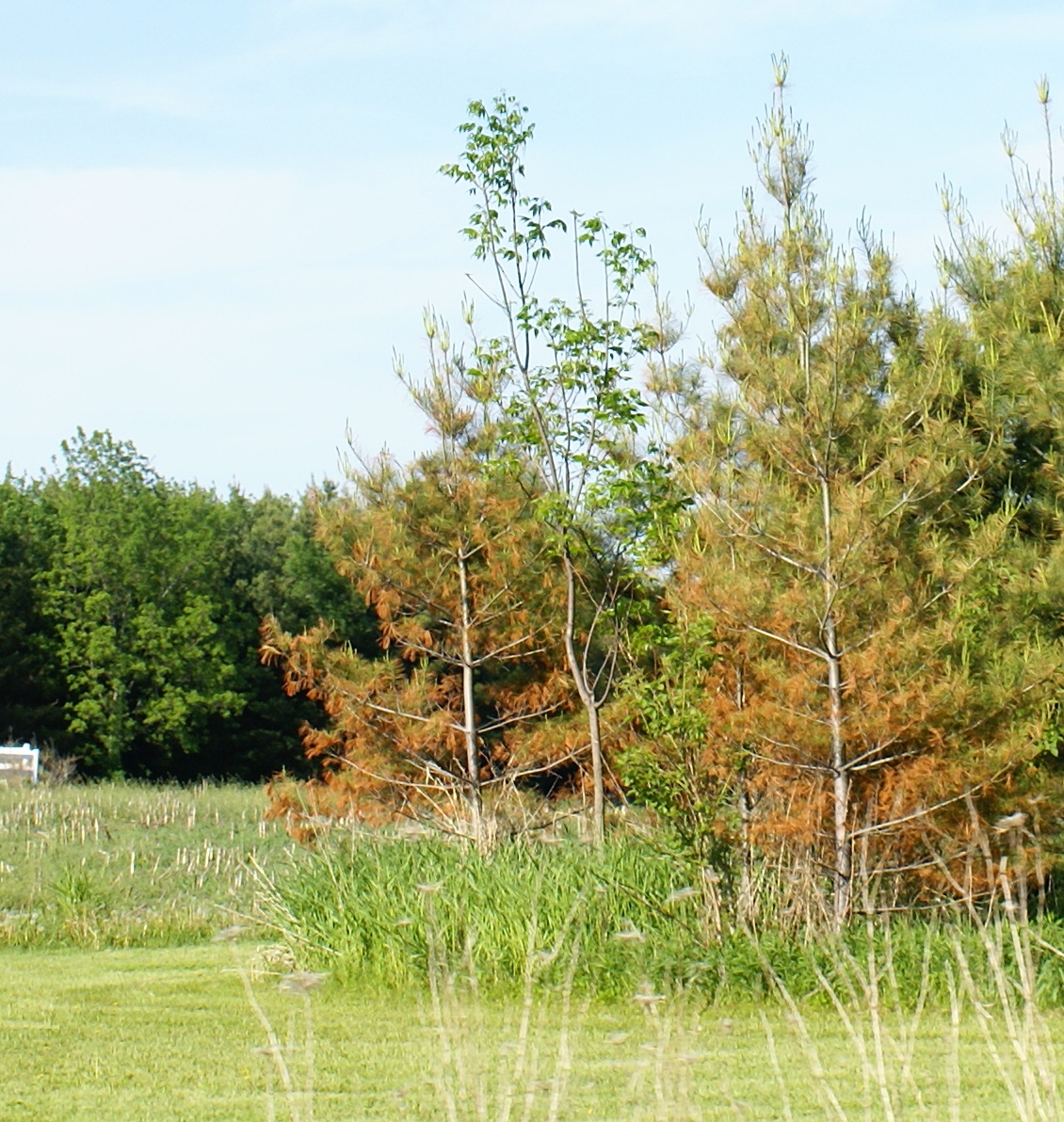
Pines fight a losing battle with needles turning from verdant green to unattractive rust.

Or worse, the needles fall out, never to return.


Think ‘Charlie Brown’s Christmas tree.’


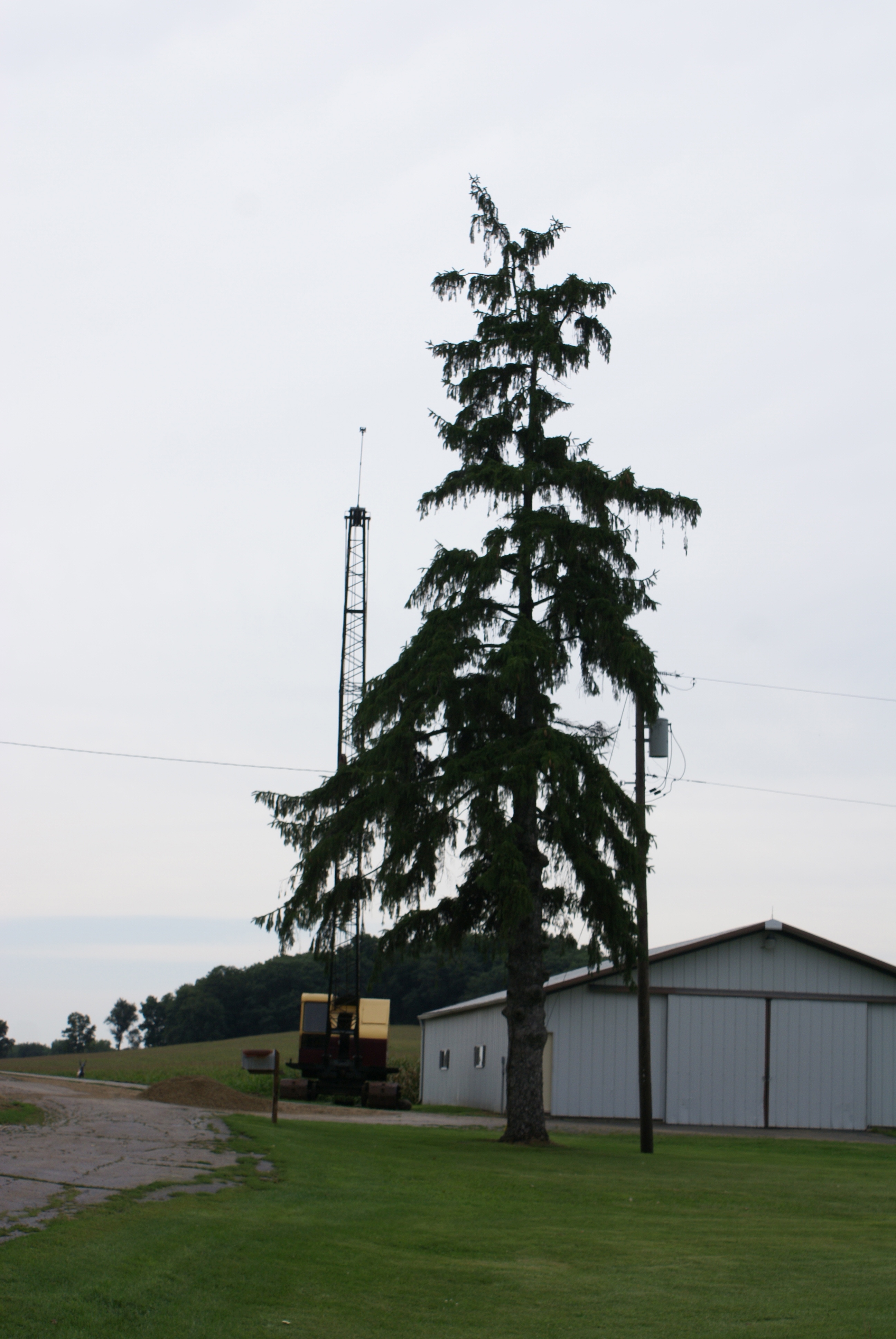
The tall conifer looks over its shoulder one day and realizes it has developed a distinct dowager’s hump.SONY DSC

Your yew (just let that phrase roll off your tongue), along with cousins cypress and hemlock, realize they are getting bald and spindly.

And the lowly arborvitae is just a bedraggled mass of sepia-colored scales drooping from veiny branches.

SONY DSC

Brittle needles.

Unnatural color.

Unattractive veins and spindly shanks and drooping limbs.

That’s how a conifer ages.


Some of us, as we wend our way through mid-middle age, mature like hardwood deciduous trees.

Fine, elegant, stately.

And some of us, as we approach our pre-old age years, can’t help but notice we are getting scaly and droopy and rusty and prickly.

None of us have total control over how we’ll age.

It’s built into our DNA.

Plant an acorn and an oak grows.

Plant a scale-covered seed and you get a conifer.

Oak trees, maple trees, birch—they grow lovely, growing old.

Conifers just . . . grow old.

But little birds lighting on the numerous exposed branches of an old conifer don’t care what it looks like.

Their unlovely tree provides rest and shelter and doesn’t mind being swarmed with small bodies as long as the little ones don’t take the prickliness personally.

Old oaks, ancient maples, venerable elms, grizzled birches—still delight the senses with their beauty.

But the  sparrows in the branches of an aging conifer don’t care about dropping needles or sagging limbs or spidery veins.

Like Charlie Brown’s Christmas tree, the conifer might not have grown lovely, growing old,

but it has grown love.

Bless the Bandaid Solutions

SONY DSCLuxury items for those of us growing up in the 1960’s are today considered basic human rights. Cameras weren’t all pricey, but film and flash bulbs could be.
Languishing in drawers of many 60’s and 70’s households were rolls and rolls of undeveloped film, waiting till the photographer garnered enough cash to bring them to the Fotomat.
Long distance calling and pay phones meant keeping one eye on the second hand of the clock and the other on a pitiful pile of disposable income.
Today your average tween can call practically anywhere in the world as long as they stay within their parents’ minutes plan.
And they have 10 thousand photos on their phones and twice that many on their facebook pages.
You know what else your average unemployed anybody has access to?
Bandaids.

Those pinkish strips of adhesive were the crucible of wealth when I was a child. Could my friend afford a bandage on a minor scrape or bump? They must be rich.
I, on the other hand, child of a genteelly impoverished private school teacher, was always told I didn’t need a bandaid.
They were expensive.
They wouldn’t make the injury better anyway.
It just needed to be cleaned well.
This meant sanitizing it with whatever in the medicine cabinet was labelled ‘Causes Unbearable Stinging Sensation.’
Then we engaged in something called ‘letting the air at it.’

But I wanted a bandage. I wanted my dad to attain sudden wealth so we could have unlimited access to Bandaids.
Not because putting a strip of padded rubbery stuff on a scratch was a status symbol.
I was too young to care.
No.
That bandage felt like a small hug.
It relieved some pain, no matter how my thrifty, cash-strapped parents scoffed at the notion.
The wound felt safe and protected.

Bandaid solutions to major problems in the 21st century, issues ranging from obesity in overdeveloped countries to famine in third-world nations, are scoffed at.
They don’t fix the problem, we hear.
They just cover it up.
A bandaid fix serves no purpose but to ignore the festering problem.

But maybe bandaids, used with common sense, do serve a purpose when dealing with these and other issues of enormity.

Some of us feel smug when we recycle our plastic bottles.
We are saving the environment!
But we really have no idea what other resources are being used to recycle that plastic, or how much if it is ending up in landfills anyway.
Our pretty recycling bandage might hide a spreading mess that we can’t cover with an entire pharmacy of wraps and bindings.

How about the old momism that is so derided?
‘Eat your vegetables. There are starving children in the world.”
And us smart aleck offspring respond, “Fine. Let’s send my creamed asparagus to them.”

This bandage not only doesn’t solve world hunger, people say.
It creates another issue—obesity—among the ‘clean plate club.’
Maybe, though, Mom was on to something.
That bandaid was decorated with little truths:
Be grateful for what you have.
You don’t deserve it so don’t waste it as if you do.
When we appreciate the wonderful gift food is, could we resist the temptation to gorge ourselves?
Could the reproachful eyes of that starving child swim up before us, reminding us that wasting, either by tossing or overindulging, is akin to stealing?

Maybe that same appreciation of physical blessings will open our eyes to blatant consumerism. We’ll focus not so much on recycling as doing what our ancestors did:
making do with what we’ve got.
Reusing and repurposing and being thrifty and not buying what we don’t need will help clean up the messy ulcerated miasma of rubbish, with a little help from the protective bandage of recycling.

Do you throw coins in a homeless person’s cup because you saw some youtube video where everyone walked past disguised family members without recognizing them?
You might be doing worse than putting on a bandaid.
You might be pouring acid on their wound.
Some of my friends, however, started with that ‘toss in a dollar’ quick-fix mentality, but didn’t stay there.
They began living and moving among the homeless, seeing them as fellow travelers instead of causes.
They aren’t eradicating the problem of homelessness or mental illness or addiction.
They know they aren’t God.
But after the feel-good bandage came off they realized we are all messed up.
We aren’t put here to fix everyone.
We are to treat everyone with dignity and wisdom and love.
I am a zealous defender of Bandaid Solutions but that doesn’t mean we should rely on them solely.
They can make us feel good and secure for awhile, but put one on an area of the body we don’t see much, like the calf or the back of the arm, and it can languish, forgotten, while the dog bite or stab wound it covers becomes infected.
Twittering ‘Bring Back Our Girls’ made a whole host of people feel like they were doing something noble when Nigerian schoolgirls were kidnapped.
They were changing the world, one tweet at a time.
But we’ve sort of forgotten those girls.
No one recently has posted ‘Bring back our girls. Or else.’
The kidnappers pay no attention to what we over here twitter during our extensive free time.
They are too busy strapping explosives on the girls to use as unwilling suicide bombers, lambs driven to slaughter of themselves and other unwilling victims.
We either get bored of a good cause too quickly, or realize the powerlessness, even of a million tweets, to change the minds of fanatics.
That twitter bandage, though, might raise some awareness of girls being misused in our own neighborhoods.
It might make us see how children are manipulated by the media or advertising or individuals or organizations to achieve goals that have nothing to do with the welfare of that child.
They are only the sacrificial lambs to further the agenda of whoever is using them.
Maybe we’ll protest not only with clever little signs but with our actions and our checkbooks.

Protesting war—any war—seldom accomplishes anything.
Governments don’t care if you disrupt traffic while carrying placards.
Especially governments who don’t like your country to begin with.
But if, while you engage in the futile effort against violence, someone rudely rams into you, you might think twice before bringing your ‘PEACE AT ALL COSTS’ sign down on the offender’s noggin.

Here’s the thing about bandaids.
They don’t stop further hurts and wounds.
They don’t make present damage disappear immediately.
But that protection, that relief from pain, albeit temporary, can have some surprising results.
We want to do whatever minor fixes we can to help relieve the hurts of others.
It helps us remember that temporary remedies are great, as long as the underlying injury can be dealt with.
And those monumental wounds, the ones no amount of adhesive and germ killer can cover,
force us to our knees before the only One who really brings temporal and eternal healing.

Grace for the Chatterbox

SONY DSC

A strong, silent type and a chatterbox

Recently the pastor preached on Mark 9.
Jesus took 3 disciples up a mountain.
His clothes became white as light,
God spoke audibly from heaven,
and Moses and Elijah, who had been dead several hundreds of years, came to discuss issues of life and especially death with Jesus.
It appears that while these three phenomenal, unprecedented events were occurring, James and John stood silent.
Then we have Peter.
In the pastor’s words, he suggested they build tents and camp out up there. With the Son of God and…the guys who had died.
WHY this inane comment?
Because ‘he did not know what to say…’

So, when Peter had nothing whatsoever of value to contribute to the conversation,
he opted to say something of absolutely no value.
Peter suffered from ‘Fill the Silence with Sounds Syndrome. (FSSS)
He is the patron saint of chatterboxes.

A chatterbox, to boil the definition down to its solid state, talks a lot.
Unlike politicians, who talk a lot to get elected, stay elected, or confound anyone who questions their record/stance/expense account/dalliances,
a chatterbox has no firm agenda in mind.
We don’t aspire to impart the wisdom accumulated by ourselves or others, as teachers do, and our verbiage doesn’t expound on the ultimate Word in the way of pastors.

We part our lips. A lot of stuff comes out. It is as simple as that.

Chatterboxes differ from windbags. We don’t just want to hear ourselves speak.
We aren’t egomaniacs. We aren’t driven by a need to convince you of our fabulousness.
Under that steady stream of babbling syllables often lies a bedrock of intelligence.
We do care about people, and express it is via a plethora of utterances.

Are chatterers a product of nature or nurture? No empirical data to back this up, but I’m guessing we are either/or, possibly both/and.
Just don’t assume that every chatterer you meet was born that way.
Many of us, in our essence, are wallflowers.
Tuck us in a quiet corner with a book.
Please.
But another psyche wars within us, a little harder to identify.
The nature that abhors a vacuum of silence.
Many non-stop talkers I know have a fascination with the written word.
Has it metamorphosed into a need for generating the spoken word?
Or maybe us FSSS sufferers harbor an unattractive, latent god-complex.
Anyone’s slings and arrows of outrageous fortune can be repelled if we only speak enough words over them.
Share a problem or concern with us and, even as part of our brain says, “Can you just keep quiet and listen, for pity’s sake?” our mouths are positively burbling with advice or sympathy or a similar woe shared by a great aunt.

The wisdom of the world sides with that portion of our brain begging for silence:

“Even a fool who keeps silent is considered wise; when he closes his lips, he is deemed intelligent. “ Proverbs 17:28

Aesop made the dictum pithy:
“Fine clothes may disguise, but silly words will disclose a fool”

George Eliot expanded on the adage.
“Blessed is the man who, having nothing to say, abstains from giving us wordy evidence of the fact.”

Even the Mad Hatter gets his digs in.
“I don’t think…”
“then you shouldn’t talk,” said the Hatter.

Compulsive talkers are surrounded by this kind of stuff. We want to appear wise and sage and prudent. Really we do. But like Peter, when we don’t know what to do, we say.

Quiet people suffer from no such urges. And they look like we want to. Intelligent.

But here is the problem. Say there is a party. A baby shower. The in-laws’ 50th anniversary.
One of our ilk sits down at a table with 3 or 4 silent types, each a quiet, wise-looking little iceberg.
Like the Titanic propelled on a turbine of words, our chatterbox steams into view and, unlike the Titanic, breaks the ice. While the icebergs don’t necessarily interact with each other much, they are tolerant of, and even engaging with the icebreaker.
Really, there isn’t much they need do. The chatterer will fill the air with a perpetual tumble of anecdotes and questions and comments.

At the end of the evening the quiet ones head for home. It was a successful evening. They hadn’t been bored. They could socialize gently. They haven’t appeared shy or been accused of being stuck-up.
The chatterbox leaves with her usual host of regrets.
‘I talked too much. Again’
‘I said such STUPID stuff.’
‘Why can’t I develop laryngitis?’
Chattererboxes find comfort where they can:
We are generally liked.
We can patter lightly on about almost any topic.
Occasionally we give offense—how could we not? The odds will catch up to us and we’ll eventually put words end-to-end that hurt someone’s feelings.
But it is almost always inadvertent. Our chief function is to care for others by filling empty space with syllables.

Sometimes we surprise ourselves by saying something worthwhile.
St. Peter burst out with the profession that Christ is the Son of the Living God. And even though he almost immediately blundered into saying something really, really stupid, God used this compulsive chatterer as a foundation to build His church.

Yes, there is ‘a time to keep silence.’
But blessedly, there is also ‘a time to speak;’